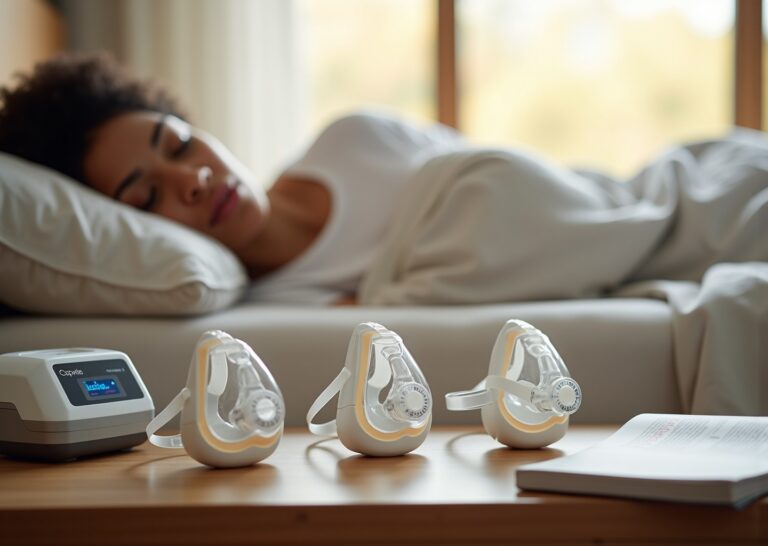
Choosing the right CPAP mask can make or break therapy. This article compares nasal, full face, and nasal pillow masks, explains how to assess your breathing and sleep habits, and gives practical fitting and troubleshooting strategies to improve comfort, reduce leaks, and boost nightly compliance so you get the health benefits of effective sleep apnea therapy.
Why mask choice matters for CPAP success
Your CPAP machine is the engine of your sleep apnea therapy, but the mask is the crucial connection that makes it all work. Think of it as the final, most personal piece of the puzzle. If that piece doesn’t fit, the entire therapy can fall apart. The single biggest reason people abandon their treatment isn’t the pressure or the noise; it’s the daily struggle with an uncomfortable, leaky, or ill-fitting mask. This is why understanding the nuances of CPAP mask types is fundamental to achieving long-term CPAP compliance.
Many people start their journey with enthusiasm, only to find themselves discouraged within weeks. A common story involves waking up multiple times a night to readjust a mask that’s digging into the bridge of their nose or hissing air into their eyes. After a few days of this, coupled with red marks that last well into the morning, the machine ends up collecting dust in a closet. This isn’t a failure of the patient or the therapy itself; it’s a failure of the mask to meet the user’s needs. Comfort isn’t a luxury in sleep apnea therapy; it’s a requirement for consistency. If you dread putting your mask on, you simply won’t use it every night, and inconsistent use means ineffective treatment.
Beyond pure discomfort, mask leaks are a direct threat to your therapy’s effectiveness. Your machine is prescribed to deliver a specific, continuous pressure to keep your airway open. When air escapes from the seal, that therapeutic pressure drops before it ever reaches your throat. Your machine may try to compensate by working harder, but it’s fighting a losing battle. The result is often a higher residual AHI (Apnea-Hypopnea Index), which means you’re still experiencing breathing events despite using the machine. A poor seal effectively turns your therapy down, leaving you tired and untreated. Furthermore, that escaping air can cause practical problems like dry eyes from air blowing upwards or skin irritation and rashes where the cushion rubs against your face.
The choice of mask style is also deeply connected to your specific clinical goals. The primary objective is to create a closed, pressurized circuit from the machine to your airway. If you naturally breathe through your nose, a nasal mask or nasal pillows can be incredibly effective and minimalist. They deliver air directly where it needs to go. However, if you’re a mouth breather, using a nasal mask is like trying to inflate a tire with a hole in it; the pressure will escape through your mouth, rendering the therapy useless. In this case, a full face mask that covers both the nose and mouth is essential to maintain the pressure circuit and keep the airway open. There are a variety of CPAP masks available, each designed to solve a different set of anatomical and breathing challenges.
Finally, we can’t ignore the emotional and practical side of wearing a device on your face all night. Claustrophobia is a very real barrier for many users. A bulky full face mask can feel overwhelming, while a low-profile nasal pillow mask that only touches the nostrils can feel liberating. Lifestyle factors also play a huge role. If you have a beard, achieving a good seal with a full face mask can be nearly impossible, making nasal pillows a far more practical choice. For frequent travelers, a lightweight, minimalist mask is much easier to pack and use on the go. Even noise is a factor; while most modern machines are quiet, a poor seal can create whistling sounds, and some mask designs direct exhaled air in a way that can disturb you or your partner.
Making the right choice from the start, or knowing when to switch, can be the difference between success and failure. If you’re struggling, don’t assume you have to “tough it out.” Your mask should work for you, not the other way around.
Is It Time for a Mask Change? A Quick Checklist
If you’re experiencing any of the following, it may be time to discuss a different mask style or size with your clinician or equipment provider:
- You consistently wake up with a dry mouth or sore throat (a classic sign of mouth leaks).
- You have red marks, pressure sores, or skin irritation on your face that doesn’t fade after an hour.
- You frequently feel or hear air leaking, especially if it’s blowing into your eyes.
- Your CPAP machine’s data report shows a high or “red” leak rate most nights.
- You find yourself waking up multiple times to readjust or tighten your mask.
- Your residual AHI remains high (typically above 5) even though you’re using the therapy nightly.
- You feel an overwhelming sense of pressure, as if you can’t exhale comfortably against the airflow.
How to evaluate your breathing habits and sleep style
Choosing the right mask isn’t about picking the most popular one; it’s about finding the one that fits your unique needs. This process starts with a little self-investigation. By understanding your own body and sleep habits, you can narrow down the options from three main categories to the one or two most likely to give you a comfortable and effective night’s sleep.
Let’s walk through a practical assessment you can do right at home. Grab a notebook and be honest with yourself as you consider these factors.
Your Breathing and Sleep Habits
A Personal Q&A Session
Answering these questions is the first and most critical step. Your answers will immediately point you toward certain mask styles and away from others.
- Do you breathe through your mouth at night? If you aren’t sure, ask a partner. Waking up with a very dry mouth is also a strong clue. Habitual mouth breathing often leads to significant air leaks with nasal or pillow masks, making therapy ineffective. This is the single most important question to answer.
- Do you suffer from frequent nasal congestion? If allergies, a deviated septum, or chronic sinus issues often leave you stuffed up, relying solely on a nasal mask can be difficult. You need a backup plan for when you can’t breathe through your nose.
- What is your primary sleep position? Are you a side sleeper, back sleeper, or stomach sleeper? Active sleepers who toss and turn need a mask with a stable seal and flexible tubing. Stomach sleepers need a mask with the lowest possible profile to avoid dislodging it on the pillow.
- Do you feel claustrophobic? The thought of having something covering a large portion of your face can be a major barrier for some. If you’re sensitive to this, a mask with minimal facial contact will be essential for your comfort and long-term use.
- Is your skin sensitive? Some people are prone to pressure marks, red lines, or skin irritation. The amount of material touching your face and the type of cushion (silicone vs. memory foam) can make a huge difference.
How Your Prescription Influences Your Choice
Pressure Levels and Device Type
Your prescribed therapy settings play a significant role. A higher pressure setting requires a very secure seal to prevent leaks. While any mask can leak, some styles are inherently more stable under high pressure.
- High Pressure Settings (Generally above 12-14 cm H2O) High pressure can sometimes cause mouth leaks even in people who are typically nasal breathers. The force of the air can push the mouth open. For this reason, full face masks are often recommended for high-pressure users because they ensure the air pressure is delivered effectively whether you breathe through your nose or mouth.
- CPAP vs. APAP vs. BiPAP A standard CPAP delivers one constant pressure. An APAP adjusts the pressure throughout the night. A BiPAP delivers a higher pressure on inhalation and a lower pressure on exhalation. These pressure fluctuations, especially with BiPAP, can challenge a mask’s seal. A mask with a robust, flexible cushion is often needed to maintain a seal as the pressure changes.
Let the Data Do the Talking
Using Your Machine’s Feedback
Your CPAP machine is a powerful tool for evaluating your mask’s performance. After a few nights with a new mask, check the data on your device’s screen or its companion app (like ResMed’s myAir). Look for two key numbers.
- Leak Rate Most machines will show your mask leak rate, often with a simple indicator like a green smiley face or a red frowny face. A good seal is crucial. If your device reports a high leak (for example, a 90th-percentile leak rate consistently above 24 L/min), your mask is either the wrong size, not adjusted properly, or the wrong style for your face.
- Residual AHI (Apnea-Hypopnea Index) This number tells you how many breathing events you’re still having per hour while using therapy. The goal is typically an AHI below 5. If your AHI remains high despite consistent use, a poor mask seal could be the culprit, as it prevents the machine from delivering the correct pressure.
Matching a Mask to Your Facial Features
Faces are not one-size-fits-all, and neither are masks. Certain features can make finding a good seal challenging.
- Nose Bridge A flat or narrow nose bridge can be a common leak spot for traditional nasal and full face masks. Look for masks with adaptive cushions or consider an under-the-nose style that avoids the bridge entirely.
- Facial Hair Beards and mustaches create tiny gaps that break the seal of a full face or nasal mask. Nasal pillows, which seal directly at the nostrils, are often the best solution for users with facial hair.
- Glasses If you like to read or watch TV with your mask on before falling asleep, a mask that sits high on the nose bridge can interfere. Nasal pillows or low-profile nasal masks are ideal.
- Dentures If you wear dentures and remove them at night, the change in your facial structure and jaw alignment can affect the fit of a full face mask. It’s important to be fitted for a mask based on how you will be sleeping.
A Simple Decision Guide
Use this step-by-step logic to find your starting point. This isn’t a rigid rulebook, but a guide to help you make an informed first choice.
- Are you a consistent mouth breather or do you have chronic nasal congestion?
- YES Start by trying a full face mask. This is the most direct solution. If you find it claustrophobic, look into compact full face models or hybrid masks.
- NO Go to question 2.
- Is your prescribed pressure high (e.g., above 14 cm H2O)?
- YES A nasal mask or a full face mask may provide a more stable seal. While nasal pillows can work, they may be more prone to leaking at very high pressures.
- NO Go to question 3.
- Do you experience claustrophobia or have very sensitive skin?
- YES A nasal pillows mask is your best starting point. It has the least facial contact. If that doesn’t work, try a minimal-contact nasal mask.
- NO You have the most flexibility. Both nasal masks and nasal pillows are excellent options. Your choice can be based on personal preference and specific facial features.
- Do you have a beard, wear glasses in bed, or sleep on your stomach?
- YES A nasal pillows mask is often the best fit for these specific needs due to its minimal footprint.
- NO This doesn’t rule out any specific mask type, so you can focus on overall comfort.
Finally, remember that travel can be a factor. If you’re a frequent traveler, the small size and light weight of nasal pillow systems make them incredibly convenient for packing in a carry-on. By working through this evaluation, you’re no longer guessing; you’re making a strategic choice for better sleep and better health.
Nasal mask deep dive
After evaluating your breathing habits, you might find yourself leaning toward a nasal mask. This style is a popular choice for many CPAP users, offering a great balance between a minimal design and a stable seal. It’s a true workhorse in the world of sleep apnea therapy, but it’s not for everyone. Let’s take a closer look at what makes a nasal mask tick, who it’s best for, and how to make it work for you.
Understanding the Nasal Mask Anatomy
A nasal mask is more than just a piece of plastic; it’s a system of components designed to work together. Understanding these parts helps with fitting and troubleshooting.
- Cushion
This is the soft part that makes contact with your face. It creates the seal around your nose, typically from the bridge down to the area just above your upper lip. Cushions are usually made from soft silicone, but you can also find gel-filled options for a different feel or even memory foam cushions, like those in the ResMed AirTouch series, which are designed to reduce pressure marks. - Frame
The frame is the rigid structure that holds the cushion and connects to the headgear. Modern frames are often lightweight and designed to minimize contact with your face, providing an open line of sight for reading or watching TV before sleep. - Headgear
These are the adjustable straps that hold the mask in place. Usually made of soft, breathable fabric, the headgear wraps around your head to secure the mask. Proper adjustment is key to a good seal without causing discomfort. - Elbow and Tubing Connection
The elbow is a joint that connects your mask to the main CPAP tube. Most modern masks feature a 360-degree swivel elbow, which allows you to move and turn in your sleep without pulling on the mask and breaking the seal. Some designs even route the tubing over the top of your head to keep it completely out of the way.
The Pros and Cons of Going Nasal
Like any mask style, nasal masks have distinct advantages and potential drawbacks. The key is matching these features to your personal needs.
Nasal CPAP mask benefits often include:
- Less Facial Contact
Compared to a full face mask, a nasal mask covers a much smaller area. This can feel less claustrophobic and is often preferred by people who wear glasses. - Stable Seal for Active Sleepers
Because it has a smaller footprint, a nasal mask is less likely to get dislodged if you’re a side sleeper or tend to move around a lot during the night. - More Natural Airflow
For those who naturally breathe through their nose, this mask style delivers pressure in a way that can feel more direct and comfortable.
Potential downsides to consider:
- Not for Mouth Breathers
This is the biggest deal-breaker. If you habitually breathe through your mouth at night, a nasal mask won’t be effective. The air pressure will simply escape through your mouth, leaving you with a dry mouth and ineffective therapy. - Nasal Congestion and Dryness
Directing pressurized air into the nasal passages can sometimes cause dryness, irritation, or congestion, especially if you have allergies or a cold. - Pressure on the Nose Bridge
The seal point on the bridge of the nose can become a sore spot for some users if the mask is too tight or doesn’t fit their facial structure well.
Patient Scenarios: When It Works and When It Doesn’t
A Perfect Match
Consider Jane, a dedicated side sleeper who confirmed she breathes through her nose. She likes to read with her glasses on for about 30 minutes before turning out the light. A nasal mask with a minimal frame gives her a clear line of sight and stays sealed even when she turns onto her side. Her therapy is effective, and she barely notices the mask is there.
A Mismatch
Then there’s David. He started with a nasal mask because he liked the low-profile design. But his device data consistently showed high leak rates, and he woke up every morning with an uncomfortably dry mouth. After talking with his sleep specialist, he realized that while he starts the night breathing through his nose, his jaw relaxes and his mouth falls open during deeper sleep stages. The nasal mask was a poor fit for his actual sleep habits, and he found success after switching to a full face mask.
Fit, Sizing, and Troubleshooting Tips
Getting the right fit is everything. A poorly fitted mask will leak, cause discomfort, and undermine your therapy. Here are some practical nasal mask fitting tips to get it right.
Finding Your Size
Don’t guess your size. Most manufacturers, like ResMed, provide printable sizing templates on their websites. Use these to measure your nose width and find the recommended cushion size. A common mistake is choosing a cushion that’s too large, which can lead to leaks around the cheeks, or one that’s too small, which pinches the nostrils.
Adjusting for a Perfect Seal
Overtightening the headgear is the most common mistake people make. A good seal comes from the cushion inflating, not from brute force. Straps should be just snug enough to hold the mask in place. If you can comfortably slide a finger between the strap and your face, it’s probably about right. Always make final adjustments while lying down in your sleeping position with the machine turned on, as your facial muscles shift when you recline.
Solving Common Problems
- Leaks and Congestion
If you’re struggling with nasal dryness or congestion, the solution is often humidity. Using your CPAP machine’s heated humidifier and a heated tube can make a world of difference and help relieve nasal congestion with CPAP. If you find your mouth is opening at night, you could try a chin strap. However, a chin strap is often a temporary fix. If mouth breathing persists, it’s a strong sign that a full face mask may be a better long-term solution. - Skin Irritation and Odors
Red marks on the bridge of your nose are a sign of too much pressure. Try loosening the top straps or consider adding a soft gel pad or a mask liner. Mask liners are fabric barriers that sit between the cushion and your skin, which can also help absorb facial oils, reduce irritation, and improve the seal. If you notice odors, it’s a sign that oils and bacteria are building up. Regular cleaning is essential.
Maintenance and Replacement Schedule
To keep your therapy effective and hygienic, you need to clean your equipment and replace parts on a regular schedule. The cushion or pillows should be wiped down daily with a CPAP-specific wipe or a damp cloth with mild, non-oily soap. Once a week, you should hand-wash the entire mask system—including the headgear and frame—in warm, soapy water. Rinse thoroughly and let it air dry completely, away from direct sunlight, which can degrade the materials. Over time, materials degrade, lose their elasticity, and become less effective.
- Cushion
Replace every 1 to 3 months. The silicone softens and breaks down from exposure to skin oils, losing its ability to hold a seal. - Headgear
Replace every 6 months. The straps stretch out over time, forcing you to overtighten them to get a good seal, which leads to discomfort. - Frame
Replace every 12 months. While durable, the frame can develop micro-cracks over time.
Full face and nasal pillows compared and how to choose between them
After exploring nasal masks, the next big decision for many CPAP users is choosing between a full face mask and nasal pillows. These two styles represent opposite ends of the spectrum in terms of coverage and contact. Understanding their designs, benefits, and drawbacks is the key to finding a mask that works with your body, not against it. This CPAP mask comparison will break down the details to help you make an informed choice.
Full Face CPAP Masks: Maximum Coverage for Mouth Breathers
A full face mask creates a seal around both your nose and mouth, forming a triangular cushion that typically rests on the bridge of your nose and below your lower lip. This design directs pressurized air to both airways simultaneously.
Full face CPAP mask pros and cons are quite distinct. On the plus side, they are the go-to solution for a few common challenges.
- Ideal for Mouth Breathing. If you naturally breathe through your mouth at night due to habit, congestion, or anatomical issues like a deviated septum, a full face mask is often the most effective choice. It ensures you receive your prescribed therapy pressure regardless of how you breathe.
- Handles High Pressures Well. For those with higher pressure settings, a full face mask can provide a more stable and robust seal. The larger surface area helps distribute the pressure, reducing the chance of the mask being pushed away from the face, which can cause leaks.
- Effective During Nasal Congestion. If you suffer from seasonal allergies or frequent colds, a full face mask allows you to continue therapy without interruption, as you can simply breathe through your mouth.
However, the design comes with trade-offs.
- Increased Facial Contact. The larger footprint means more contact with your skin, which can lead to red marks, skin irritation, or a feeling of being overwhelmed.
- Potential for Claustrophobia. The bulk and coverage of a full face mask can trigger feelings of claustrophobia in some users.
- Higher Leak Potential. With a larger seal perimeter, there are more opportunities for leaks to occur, especially around the cheeks and nasal bridge as you change positions during sleep.
Nasal Pillow CPAP Masks: The Minimalist Approach
Nasal pillows are the most minimal mask style available. Instead of a cushion that covers your nose, they use two small, soft “pillows” that insert gently into the nostrils to deliver pressurized air directly. The headgear is often just a simple strap.
The primary nasal pillow CPAP advantages center on freedom and comfort.
- Minimal Facial Contact. With almost no contact on the face, nasal pillows eliminate pressure sores on the nasal bridge and are excellent for users with sensitive skin. They also accommodate facial hair much better than other mask types.
- Excellent for Claustrophobia. The open field of vision and lightweight feel make this mask a top choice for anyone who feels confined by larger masks. You can easily wear glasses, read, or watch TV before bed.
- Great for Active Sleepers. The low profile and secure nostril seal often remain stable even when you toss and turn. Many designs also feature a top-of-the-head tube connection, keeping the hose out of your way.
The drawbacks are directly related to its targeted design.
- Not for Dedicated Mouth Breathers. If you breathe through your mouth, the air pressure will escape, rendering your therapy ineffective. This is the single biggest limitation of nasal pillows.
- Can Cause Nasal Dryness or Soreness. The direct airflow into the nostrils can sometimes cause irritation, dryness, or even nosebleeds. Proper humidification is essential to manage this.
- Less Stable at Very High Pressures. While many modern nasal pillows perform well at higher settings, some users find they can become dislodged or create a jet-like feeling at very high pressures.
Practical Rules for Choosing
Consider a full face mask if: You are a confirmed mouth breather, have chronic nasal obstruction, or your prescribed pressure is on the higher end and causing leaks with other masks.
Consider nasal pillows if: You breathe through your nose, prioritize a minimal feel, experience claustrophobia, are an active sleeper, or have facial hair.
What About Hybrid and Total Face Masks?
If neither option seems quite right, a hybrid mask might be the answer. It combines features of both, typically sealing under the nose like a nasal cradle while also covering the mouth. This eliminates pressure on the nasal bridge. A total face mask is a less common option that seals around the entire perimeter of the face, used in cases of difficult facial anatomy or persistent leaks with all other styles.
Accessories and Adjustments That Help
Your mask choice isn’t final. Accessories can fine-tune your experience.
- Chin Straps. A simple chin strap can help keep your mouth closed, potentially allowing a mouth breather to successfully use nasal pillows. However, it doesn’t work for everyone.
- Mask Liners. These fabric barriers sit between the mask cushion and your skin, reducing irritation and absorbing facial oils to improve the seal on full face masks.
- Heated Humidification. This is non-negotiable for many nasal pillow users. Adjusting the humidity level can prevent nasal dryness and irritation.
Making the Most of Your Mask Trial
Your durable medical equipment (DME) supplier usually provides a trial period, often around 30 days, to ensure a proper fit. Use this time wisely. Don’t just wear the mask; analyze its performance each morning by noting your comfort, the reported leak rate from your machine, and any specific issues like red marks or soreness. If your data shows high leaks or your comfort is consistently low after a week of adjustments, it’s time to call your supplier and try a different style.
Side-by-Side Comparison
| Feature | Full Face Mask | Nasal Pillows |
|---|---|---|
| Best For | Mouth breathers, high pressures, nasal congestion | Nasal breathers, claustrophobia, active sleepers |
| Pros | Accommodates mouth breathing, stable at high pressures | Minimal contact, clear field of vision, travel-friendly |
| Cons | Bulky, can cause claustrophobia, larger leak area | Requires nasal breathing, can cause nasal dryness |
| Facial Contact | High (covers nose and mouth) | Very Low (seals at nostrils) |
Your Personal Decision Checklist
- How do I breathe at night? (If mouth, lean toward full face. If nose, lean toward pillows.)
- What is my pressure setting? (If high, a full face mask may be more stable.)
- Do I feel claustrophobic easily? (If yes, nasal pillows are a great starting point.)
- Do I have sensitive skin or facial hair? (If yes, the minimal contact of nasal pillows is a major benefit.)
- Am I an active sleeper? (If yes, consider nasal pillows, especially a model with a top-of-head tube.)
Frequently Asked Questions
Navigating the world of CPAP masks can feel overwhelming, but you’re not alone. Here are answers to some of the most common questions I hear from people just starting their therapy or looking to make a change. Think of this as your quick-start guide to solving common mask issues.
Frequently Asked Questions About CPAP Masks
Which mask is best if I’m a mouth breather?
A full-face mask is almost always the recommended choice for mouth breathers. It covers both your nose and mouth, ensuring the pressurized air goes where it’s needed, even if your mouth falls open during the night. If you consistently wake up with a very dry mouth while using a nasal or pillow mask, that’s a telltale sign you need to switch. Contact your durable medical equipment (DME) supplier to trial a full-face style.
Can I just use a chin strap instead of a full-face mask?
A chin strap can be a helpful tool for some, as it provides gentle support to keep the jaw from dropping. It works well for people who only occasionally open their mouths. However, if you have chronic nasal congestion or tend to breathe forcefully through your mouth, a chin strap likely won’t be strong enough to prevent air leaks. It’s an inexpensive first step, but if high leaks and dry mouth continue, a full-face mask is the more reliable solution.
Are nasal pillows safe to use with high CPAP pressures?
Absolutely. Modern nasal pillows are engineered to create a secure seal even at higher therapy pressures. If you’re experiencing leaks or the pillows feel like they’re being pushed out of your nostrils, the issue is more likely related to fit than pressure. An incorrect pillow size or improper headgear adjustment is usually the culprit. Double-check that you’re using the right size from your fit pack and that the headgear isn’t too tight or too loose.
How can I manage claustrophobia or anxiety from the mask?
Feeling anxious about wearing a mask is completely normal. The key is gradual desensitization. Start by wearing the mask for short intervals during the day while you’re awake and doing something relaxing, like reading or watching TV. Don’t connect it to the machine at first. This helps your brain adapt to the sensation. Nasal pillows and other minimal-contact masks are often a great starting point, as they cover less of your face. If the feeling persists, discuss it with your sleep specialist.
What are some tips for traveling with my CPAP?
First, never pack your CPAP machine in checked luggage; always bring it as a carry-on. Nasal pillow masks are fantastic for travel because they are incredibly lightweight and compact. If you use a travel-specific machine like the ResMed AirMini, make sure your mask is compatible. And don’t forget to plan for distilled water for your humidifier, either by packing a small amount or purchasing it at your destination.
When is it time to ask my DME for a re-fit or a new mask?
You should request a re-fit if you’re experiencing persistent leaks, waking up with red marks or sores on your face, or simply can’t get comfortable. Life changes like significant weight loss or gain, or major dental work, can also alter your facial structure and require a new mask style or size. Document your issues with photos and leak data to help your DME fitter find a better solution.
What should I know about insurance coverage for masks?
Coverage for CPAP supplies is standard with most insurance plans, but the details vary significantly. Your plan will dictate the replacement schedule, your co-pay or deductible, and which DME suppliers are in-network. It’s crucial to always confirm your benefits directly with your insurance company before ordering new supplies to avoid unexpected bills.
When should I talk to my sleep specialist about mask problems?
Your DME is your go-to for fitting and equipment issues. However, you should loop in your sleep specialist if problems continue despite trying different masks and adjustments. Contact your doctor if your sleep apnea symptoms return, your device data shows a high residual AHI (above 5), or you develop significant skin irritation that won’t heal. These can be signs that your therapy needs a clinical adjustment beyond just the mask.
Conclusion and next steps
You’ve now explored the landscape of CPAP masks, from the minimal design of nasal pillows to the comprehensive coverage of a full face mask. Making the right CPAP mask choice isn’t about finding a single “best” mask, but about finding the one that fits your unique needs. Let’s bring it all together with a clear plan to move forward.
To recap, your decision rests on a few key personal factors.
- Nasal Pillows are excellent for active sleepers, people with claustrophobia, and those with facial hair. They offer a minimal feel but require clear nasal passages and may be challenging for mouth breathers or those on very high pressures.
- Nasal Masks provide a great middle ground. They are less invasive than full face masks and often more stable than pillows, making them a popular choice for a wide range of users, especially side sleepers who breathe through their nose.
- Full Face Masks are the go to solution for mouth breathers, individuals with frequent nasal congestion, or those who need high CPAP pressures. While they offer a secure seal, their larger size can feel cumbersome for some.
Your breathing habits, prescribed pressure, preferred sleep position, and facial anatomy are the signposts that point you toward your best starting option. But the journey doesn’t end with a guess. It begins with a structured trial.
Here are your practical next steps to improve CPAP comfort and ensure your therapy is effective.
1. Arrange a Guided Mask Trial
Contact your durable medical equipment (DME) supplier and ask about their mask trial or exchange program. Most suppliers offer a 30-day window to find the right fit. Be specific about your concerns. Mention if you’re a mouth breather, a side sleeper, or feel anxious in larger masks. Ask if they provide a “fit pack,” which includes multiple cushion sizes for a single mask style. This is the most effective way to get your initial sizing right at home. Don’t be afraid to advocate for yourself; your supplier’s job is to help you succeed with therapy.
2. Collect Objective Data for 2 to 4 Weeks
Treat your first few weeks with a new mask like a science experiment. Your feelings are important, but data tells the real story of how well the mask is performing. Keep a small notebook or a note on your phone by your bed and log the following each morning.
- Hours of Use. How long did you keep the mask on?
- Leak Rate. Check your CPAP machine’s report for the 90th percentile leak. A good target is generally below 24 L/min, but the goal is to keep it in the green or acceptable range indicated by your device.
- Residual AHI. Your apnea hypopnea index should ideally be below 5 events per hour. If it’s consistently higher, the mask may not be delivering effective therapy.
- Comfort Score. On a scale of 1 to 10, how comfortable was the mask? Did you have to overtighten it? Did it stay in place?
- Notes and Photos. Jot down any specific issues. Did you wake up with a dry mouth? Did the mask dig into the bridge of your nose? If you have red marks or pressure sores in the morning, take a quick photo. This visual evidence is incredibly helpful for your DME fitter or clinician.
3. Know When to Adjust, Switch, or Consult
After a couple of weeks, review your notes. If your comfort score is low and your leak rate is high despite adjustments, it’s time to try a different cushion size or a new mask style. Contact your DME supplier with your data and photos to arrange an exchange. If your data shows a good seal and low AHI but you still feel tired, or if your AHI remains high despite a good seal, it’s time to consult your sleep clinician. There may be an issue with your pressure settings that needs professional evaluation.
Finding the right mask is the most critical step toward successful sleep apnea treatment adherence. It requires patience and a bit of detective work, but the payoff is transformative. Better sleep, improved energy, and long term health are within your reach. Your journey starts now. Commit to a structured mask trial for the next few weeks. Document your experience, analyze the results, and communicate with your care team. Don’t settle for discomfort or leaky seals. The right mask is out there, and finding it will make all the difference.
References
- CPAP Mask Types | SleepApnea.org — Most Popular Types of CPAP Masks. There are three main types of CPAP masks: full-face, nasal, and nasal pillow masks. Full-Face CPAP Mask.
- Common Types of CPAP Masks in 2025 – Blog — CPAP Mask Options · 1. CPAP Nasal Masks · 2. CPAP Full Face Masks · 3. Nasal Pillow CPAP Masks · 4. Hybrid CPAP Masks · 5. Oral CPAP Masks · 6. CPAP Total Face Masks.
- Best CPAP Masks of 2025: Expert Reviewed and Rated — In this guide, we'll introduce you to our top picks of the year and walk you through what you need to know before you buy.
- CPAP Mask Market Analysis 2025 — CPAP Mask Market Analysis 2025. Global CPAP Mask market size 2021 was recorded $2401.77 Million whereas by the end of 2025 it will reach $2998 Million.
- CPAP Masks | Find the Best Fit for You – Resmed — Explore Resmed's industry-leading CPAP masks for sleep apnea. Designed to be comfortable and effective, they ensure a secure fit to keep your airway open.
- Best Rated CPAP Machines (2025 Guide) — Discover the best CPAP machines for 2025 to manage sleep apnea symptoms, improve sleep quality, and reduce health risks with expert device …
- Top CPAP Machines of 2025: Expert Picks and Reviews – iSLEEP — Shopping for a CPAP machine in 2025? Discover expert reviews of the best models, including ResMed AirSense 11, AirMini, and budget-friendly …
- Which CPAP masks are best for you? – Mayo Clinic — There are a variety of CPAP masks available to find the best fit for you. Everyone has different needs, preferences and face shape.
Legal Disclaimers & Brand Notices
Medical Disclaimer: The content of this article is provided for informational purposes only and is not intended to be a substitute for professional medical advice, diagnosis, or treatment. Always seek the advice of your physician, sleep specialist, or other qualified health provider with any questions you may have regarding a medical condition, CPAP therapy, or before making any changes to your treatment plan, mask type, or device settings. Reliance on any information provided in this article is solely at your own risk.
Trademark Acknowledgement: All product names, logos, and brands mentioned in this article, including but not limited to ResMed, AirTouch, AirMini, and myAir, are trademarks or registered trademarks of their respective owners. Use of these names, trademarks, and brands does not imply endorsement or affiliation.