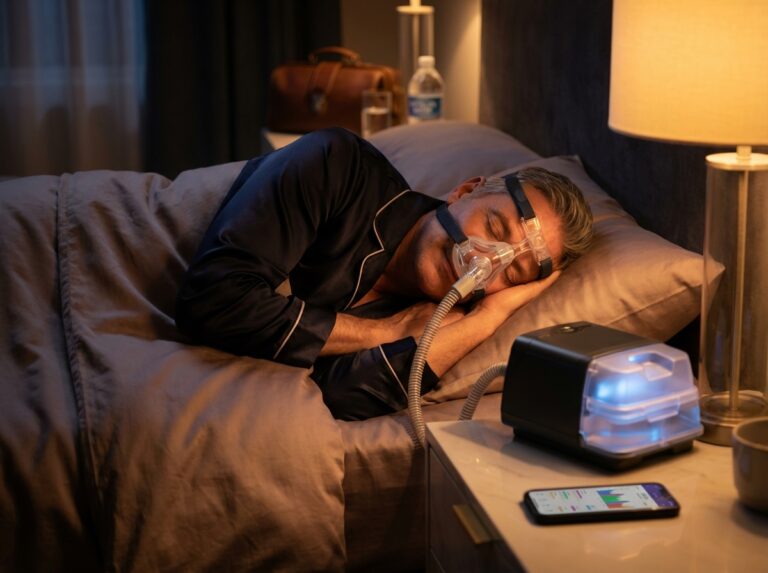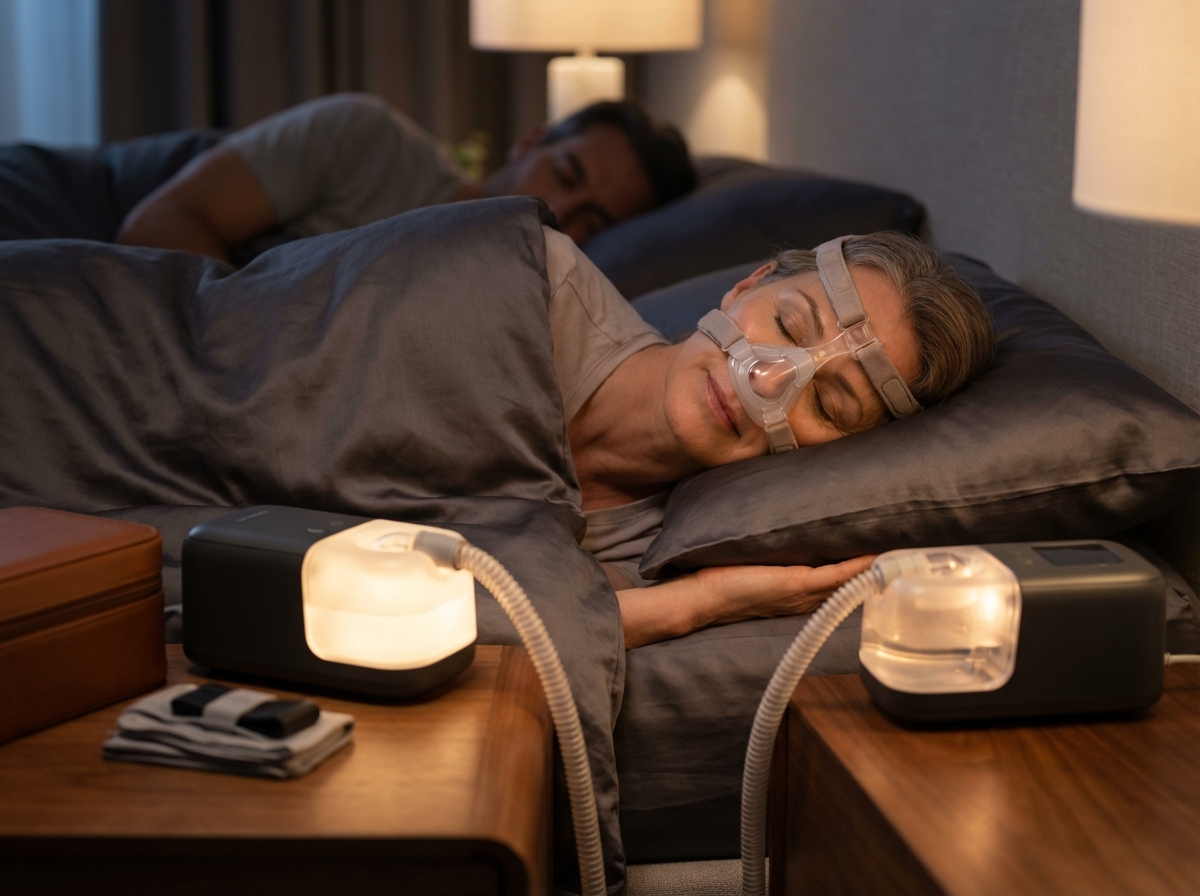
CPAP therapy is the most common and effective treatment for obstructive sleep apnea. This guide explains how CPAP works, how to choose and fit masks, which machines and accessories improve comfort and adherence, and practical tips to troubleshoot common problems so you can get better sleep and better health with consistent nightly use.
Understanding Sleep Apnea and How CPAP Works
Obstructive sleep apnea is a condition where the muscles in your throat relax excessively during sleep. This relaxation causes the soft tissue at the back of the throat to collapse, which blocks the flow of air into your lungs. When this happens, your blood oxygen levels drop and your brain triggers a brief awakening to reopen the airway. These interruptions can happen hundreds of times in a single night. Most people do not remember these moments, but they leave the body in a state of constant stress. According to 2025 sleep apnea statistics, nearly 9 percent of the US population lives with this condition. The physical toll is significant because the heart must work harder to compensate for the lack of oxygen. Over time, this leads to high blood pressure, heart disease, and metabolic issues.
The primary way doctors measure the severity of this condition is through the Apnea Hypopnea Index, or AHI. This index represents the average number of times your breathing stops or becomes shallow per hour of sleep. An apnea is a complete pause in breathing that lasts at least ten seconds. A hypopnea is a partial blockage that results in a drop in oxygen or an awakening. Doctors use these numbers to categorize the condition into specific levels of severity.
Sleep Apnea Severity Classification
The following table outlines how clinical professionals define the intensity of obstructive sleep apnea based on the hourly event rate.
| Severity Category | AHI (Events Per Hour) | Clinical Implications |
|---|---|---|
| Normal | Fewer than 5 | Minimal impact on sleep quality for most adults. |
| Mild | 5 to 15 | May cause daytime sleepiness and increased long-term health risks. |
| Moderate | 15 to 30 | Significant sleep fragmentation and higher risk of cardiovascular issues. |
| Severe | Greater than 30 | High risk of heart attack, stroke, and severe daytime impairment. |
Continuous Positive Airway Pressure, or CPAP, is the most common treatment for moderate to severe cases. It works by delivering a constant stream of filtered air through a mask worn over the nose or mouth. This air pressure acts as a pneumatic splint. It provides just enough force to keep the soft tissues of the upper airway from collapsing. Instead of the throat closing shut, the pressurized air holds the passage open so breathing remains steady. This prevents the oxygen drops and the frantic awakenings that ruin sleep quality.
There are several modes of positive airway pressure therapy. A standard CPAP machine provides one fixed pressure level throughout the night. This pressure is determined during a sleep study to ensure it is strong enough to stop apneas in your most vulnerable sleep positions. Automatic Positive Airway Pressure, or APAP, uses an algorithm to sense changes in your breathing. It can increase the pressure when you roll onto your back or enter REM sleep, then decrease it when you need less support. Bilevel Positive Airway Pressure, or BiPAP, is often used for patients who struggle with high pressures. It offers a higher pressure for inhalation and a lower pressure for exhalation. This makes it easier to breathe out against the machine.
While CPAP is the gold standard, other treatments are available for specific situations. Oral appliances are custom-fitted devices that move the lower jaw forward. This creates more space at the back of the throat. These are often used for mild to moderate apnea or for people who cannot tolerate a mask. Surgery is another path, involving the removal of tonsils or the repositioning of the tongue. Some patients benefit from positional therapy, which uses devices to keep them from sleeping on their backs. Weight loss is frequently recommended because it reduces the fatty tissue around the neck that contributes to airway collapse.
Diagnosis usually begins with a sleep study. A polysomnogram is an in-lab test where you stay overnight in a clinic. Technicians monitor your brain activity, heart rhythm, and muscle movements. This provides the most detailed data. A home sleep apnea test is a more convenient option for many. It uses a portable kit to track your breathing and oxygen levels while you sleep in your own bed. After a diagnosis, you may need a titration study to find the exact pressure setting that keeps your airway open.
The effectiveness of your therapy is tracked through data stored on your machine. Modern devices record your residual AHI, which is the number of events that still occur while you are using the device. A successful treatment usually brings the AHI below five. Machines also track mask leak data. If the mask does not seal properly, the pressurized air escapes and the therapy becomes less effective. Doctors also look at therapy hours to ensure you are using the device long enough to see health benefits. Research from ResMed at SLEEP 2025 indicates that consistent use can lower the risk of cardiovascular hospitalizations by 22 percent.
The long-term benefits of staying compliant are substantial. A study discussed at EASD 2025 found that CPAP use is linked to lower mortality in people with Type 2 diabetes. The data showed a 26 percent reduction in all-cause mortality for those who used their machines regularly. This highlights the importance of working through the initial adjustment period.
You should contact your clinician if you experience ongoing issues. If your machine shows a high residual AHI despite regular use, your pressure settings may need to be verified or adjusted. Persistent daytime fatigue, loud snoring, or waking up gasping while wearing the mask are signs that the therapy is not optimized. You should also seek help for side effects like severe skin irritation, stomach bloating, or significant nasal dryness. A sleep specialist can often solve these problems by changing your mask type or adjusting the humidification settings. Regular follow-up appointments ensure that your device continues to provide the protection your heart and brain need.
Making CPAP Comfortable Every Night
Finding the right mask is the most important step in your treatment. It is the only part of the equipment that you actually feel. Nasal pillows are a popular choice for many people. These masks use small silicone inserts that rest at the base of your nostrils. They are very lightweight. They provide a clear field of vision. This makes them perfect if you like to read or watch television before sleep. People who feel trapped by larger masks often prefer this minimal design. However, they might cause irritation inside the nose if your pressure settings are very high.
Nasal masks cover the entire nose from the bridge to the upper lip. They offer a more stable seal than pillows for some users. This style works well for people who move around in their sleep. But if you breathe through your mouth, a nasal mask might not be enough. You might wake up with a very dry mouth or find that the air escapes before it can help your airway. Full face masks are the standard solution for mouth breathers. These masks cover both the nose and the mouth. They are also helpful when you have a cold or allergies that cause nasal congestion. Modern full face masks are much smaller than older versions. Many now sit under the bridge of the nose to prevent skin sores and eye irritation.
Hybrid masks offer a middle ground. They usually sit under the nose but still cover the mouth. This design avoids the pressure on the bridge of your nose while still helping mouth breathers. Choosing the right style depends on your unique anatomy and your breathing habits. According to 2025 sleep apnea statistics, about 87 percent of people report that their sleep quality improves significantly after six months of consistent use. Getting the mask right is how you reach that milestone.
Step by Step Mask Fitting
A good fit starts with the right size. Most manufacturers provide a paper or plastic sizing guide. You should use this guide to measure the width of your nose and the distance from your nose bridge to your chin. Once you have the right size, you must fit the mask while lying down. Your facial muscles and skin shift when you are horizontal. If you fit the mask while standing, it will likely leak once you hit the pillow. Start with all the straps loose. Turn your machine on so the cushion can inflate with air. This air creates the seal. Gently tighten the straps until the leaks stop. You should be able to fit two fingers under the headgear. Overtightening is a common mistake that leads to skin breakdown and more leaks. If the mask is too tight, it flattens the cushion and breaks the seal. You can use mask liners made of cotton to protect your skin. Gel pads are also available to cushion the bridge of the nose. If the standard straps feel too short, headgear extenders can provide a better fit for larger head sizes.
Managing Airflow and Humidity
Dryness is a frequent complaint for new users. Most machines now come with a built in heated humidifier. This device warms water and adds moisture to the air you breathe. It prevents your throat and nasal passages from drying out. You can adjust the humidity level based on the season. In the winter, you might need a higher setting. Heated tubing is a vital accessory for comfort. It keeps the air warm as it moves from the machine to your face. Without heated tubing, the warm air can cool down and turn back into water. This causes a gurgling sound or splashes water onto your face. This is often called rainout. Using both a humidifier and heated tubing creates a much more natural breathing experience.
| Problem | Common Cause | Possible Solution |
|---|---|---|
| Air Leaks | Old cushion or loose straps | Replace cushion every three months |
| Dry Mouth | Mouth breathing | Use a chin strap or full face mask |
| Bloating | Swallowing air | Use the ramp feature or lower pressure |
| Skin Redness | Overtightening | Try cotton mask liners |
Overcoming Common Obstacles
Many people struggle with the feeling of high pressure. The ramp setting is a helpful tool for this. It starts the machine at a very low pressure. The pressure then increases slowly over twenty or thirty minutes. This gives you time to fall asleep before the full pressure kicks in. If you feel like you cannot exhale against the air, ask your provider about pressure relief settings. These settings slightly drop the pressure when you breathe out. Aerophagia is another issue where you swallow air and feel bloated. Changing your sleeping position or using a wedge pillow can help. If you feel claustrophobic, try wearing the mask during the day. Put it on while you watch a movie or read. This helps your brain get used to the sensation without the pressure of trying to sleep.
Accessories for Better Sleep
Small additions can make a big difference in your nightly routine. A chin strap is a simple fabric band that keeps your mouth closed. This is perfect for nasal mask users. Specialized CPAP pillows have cutouts on the sides. These cutouts give the mask room so it does not get pushed aside when you sleep on your side. You can also find soft fleece covers for the silicone straps. These prevent the straps from leaving marks on your cheeks. If you travel often, look for a travel power adapter or a portable battery pack. These allow you to maintain your therapy even when you are away from home.
Cleaning and Maintenance
Keeping your equipment clean is non negotiable. Bacteria and mold can grow in the damp environment of the humidifier and tubing. You should wipe the mask cushion every morning with a damp cloth or a specialized mask wipe. This removes skin oils that break down the silicone. Once a week, you should soak the mask, tubing, and water chamber in warm water with mild soap. Avoid using harsh chemicals or scented soaps. These can damage the materials and irritate your lungs. Rinse everything thoroughly and let it air dry away from direct sunlight. Replace your filters according to the manufacturer schedule. Clean equipment lasts longer and protects you from respiratory infections.
Choosing the Right CPAP Machine and Accessories
Selecting the right equipment is the next step after a sleep apnea diagnosis. The market in 2025 offers various technologies designed to make breathing easier during sleep. Most patients start with one of three primary device types. A standard CPAP machine delivers a single fixed pressure throughout the night. This is often the most affordable option but it does not adjust if your needs change during different sleep stages. APAP or Auto-adjusting Positive Airway Pressure machines are now the most common choice. These devices use algorithms to sense your breathing patterns and adjust the pressure range moment by moment. This flexibility often leads to better comfort as the machine only pushes as much air as needed. BiPAP or Bilevel machines provide two distinct pressures. One pressure is for inhalation and a lower pressure is for exhalation. Doctors typically reserve BiPAP for patients with high pressure requirements or specific lung conditions.
Essential Machine Features
Modern devices are much quieter than older models. Most top tier machines operate at noise levels below 30 decibels which is similar to a quiet whisper. If you are a light sleeper, look for machines with insulated motors. The ramp feature is another vital tool for beginners. It starts the therapy at a very low pressure to help you fall asleep and then slowly increases to your prescribed level over 20 to 45 minutes. Pressure relief algorithms like EPR or C-Flex also improve comfort. These settings slightly drop the air pressure the moment you begin to exhale so you do not feel like you are fighting against the machine. Most 2025 models include integrated heated humidifiers. These prevent the dry throat and nasal congestion often associated with therapy. You should check if the humidifier chamber is easy to remove and clean to maintain hygiene.
Data Tracking and Connectivity
Technology has changed how we monitor sleep health. Most new machines use cloud data telemetry to send your sleep stats directly to your doctor or a mobile app. You can track your own progress through apps like myAir or DreamMapper. These platforms show your usage hours and your Apnea-Hypopnea Index or AHI. The AHI represents the number of times your breathing stops or slows down per hour. A successful therapy session usually results in an AHI below five. These apps also monitor mask leaks. If the leak rate is too high, the therapy becomes less effective. Accessing this data helps you stay motivated and allows your clinician to make remote adjustments to your settings without an office visit.
| Feature | CPAP | APAP | BiPAP |
|---|---|---|---|
| Pressure Type | Fixed | Variable Range | Two Levels |
| Best For | Simple OSA | Standard Treatment | High Pressure Needs |
| Comfort Level | Moderate | High | Very High |
Understanding Insurance Compliance
Insurance companies usually require proof that you are using the machine before they pay for it. This is known as the compliance period. Most insurers look for at least four hours of use per night for 21 out of 30 consecutive days. If you fail to meet these metrics, the insurance company might take the machine back or refuse to cover the cost. According to 2025 sleep apnea statistics, nearly one third of people quit therapy in the first year. Staying consistent during the first 90 days is critical for both your health and your financial coverage. Your machine automatically records this data and sends it to your provider to verify your adherence.
Accessories and Maintenance
The machine is only one part of the system. You will need filters to keep dust and allergens out of the motor. Disposable white filters should be changed every month while non-disposable foam filters need rinsing every two weeks. Tubing is another essential component. Heated tubing is highly recommended because it keeps the air warm and prevents condensation from forming inside the tube. Water chambers should be filled with distilled water to avoid mineral buildup. You can also enhance your setup with aftermarket power solutions. If you travel frequently, look for a machine with universal power supplies that work internationally. Battery options like the Medistrom series allow for several nights of use away from a power outlet. These additions make the therapy fit into your lifestyle rather than forcing you to change your habits.
Durability and Warranty
A quality CPAP machine typically lasts about five years. Most manufacturers provide a two year warranty that covers mechanical failures. It is important to register your device on the manufacturer website to receive safety updates. You should also check for recalls or manufacturer notices regularly. The industry has seen significant safety updates in recent years and staying informed ensures your equipment remains safe to use. If your machine starts making a grinding noise or fails to provide consistent pressure, it may be time for a replacement or professional service.
Smart Buying Strategies
When choosing a machine, balance the price with the level of support you receive. Online retailers often have lower prices but local clinics provide hands on mask fittings and in person troubleshooting. Many providers offer trial periods for masks. Since the mask is the most personal part of the therapy, testing different styles like nasal pillows or full face masks is essential. Take the time to test the interface and ensure the headgear does not irritate your skin before committing to a specific model. Always consult with your clinician before adding third party parts to ensure they do not interfere with the pressure delivery of your specific machine.
Frequently Asked Questions
Starting a new medical treatment often brings up a lot of questions. It is normal to feel a bit overwhelmed when you first bring your machine home. Many people worry about how they will look or if they can really sleep with something on their face. These concerns are common. Understanding the facts can help you feel more confident as you begin this journey toward better health.
What to expect during the first weeks
The initial period is a major transition for your body and your brain. You might find the sensation of pressurized air strange or even uncomfortable at first. Some people feel a bit claustrophobic. It is common to wake up and find that you took the mask off in your sleep without realizing it. Research shows that between one third and one half of patients stop using their devices within the first year. However, those who stay consistent have an 80 percent success rate in managing their symptoms. Your brain needs time to stop seeing the mask as a foreign object. Many users start to feel more alert during the day after just a few nights of consistent use. By the end of the first month, the routine usually becomes second nature.
The question of dependence
A frequent misconception is that you will become addicted to the machine. CPAP therapy does not create a physical dependence. It is a mechanical solution to a physical blockage in your airway. The machine provides a flow of air that acts like an invisible splint to keep your throat open. If you stop using it, your airway will simply go back to collapsing as it did before. It is very similar to wearing glasses. You are not addicted to the glasses, but you rely on them to see clearly. When you take them off, your vision returns to its natural state. The same happens with your breathing when you stop therapy.
Traveling with your device
You do not have to stay home just because you use CPAP. Most modern machines are designed for travel and come with a dedicated carrying case. If you enjoy camping or travel to places with unreliable power, there are many battery pack options available. These batteries can often power a machine for one or two nights. When flying, remember that a CPAP is a medical device. It does not count toward your carry on luggage limit under ADA rules. It is a good idea to bring a copy of your prescription and a travel extension cord. Always empty the water chamber before packing the machine to avoid water damage to the internal electronics.
Impact on partners and intimacy
Many patients worry that the machine will ruin the atmosphere in the bedroom. In reality, most partners are relieved when the loud snoring and gasping stop. Modern machines are very quiet and often produce less noise than a small fan. If the air blowing out of the mask bothers your partner, you can look for masks with diffused venting systems. These systems break up the airflow so it is less noticeable. Communication is key. Discussing the health benefits can help your partner understand why the treatment is necessary. Improved sleep often leads to better moods and more energy for your relationship during the day.
Conclusions and Next Steps for Better Sleep
CPAP therapy works by delivering a constant stream of pressurized air through a mask to keep your airway open while you sleep. This air acts as a gentle splint for the tissues in your throat. It prevents the collapses that cause snoring and dangerous pauses in breathing. When the airway stays open, your blood oxygen levels remain stable. Your heart does not have to work as hard to compensate for the lack of air. This process is the foundation of treating obstructive sleep apnea effectively. Consistent use of the device is the only way to achieve these health benefits.
Consistency matters for your long term survival and daily performance. Untreated sleep apnea leads to significant health risks including hypertension and stroke. Beyond survival, regular use eliminates the brain fog and exhaustion that hinder your productivity. The annual cost of lost productivity from sleep apnea in the United States is estimated at nearly 87 billion dollars. Using your machine every night helps you reclaim your focus and energy.
Your Action Plan for This Week
Confirm Device Settings with Your Provider
Call your sleep specialist or the company that provided your machine. Ask them to verify that your pressure settings are correct based on your most recent sleep study. If you have gained or lost weight recently, your pressure needs might have changed. Ensuring the settings are accurate is the first step toward effective treatment.
Practice Proper Mask Fitting
Set aside ten minutes during the day to practice fitting your mask. Put the mask on while sitting up and then lie down in your usual sleeping position. Your face changes shape when you lie down. Adjust the straps so the mask is snug but not tight enough to leave marks on your skin. A good seal should feel comfortable and silent.
Replace Worn Cushions and Filters
Check the silicone cushion on your mask for any signs of wear or stiffness. Oils from your skin can break down the material over time. This leads to leaks and discomfort. Replace the cushion if it feels slippery or looks cloudy. You should also check your machine filter. A dirty filter forces the motor to work harder and can introduce dust into your airway.
Schedule a Follow Up Appointment
Contact your sleep clinic to book a progress check. Most providers want to see you within the first three months of starting therapy. They can download the data from your machine to see how many apnea events you are still having. This data allows them to make informed adjustments to your care plan.
Explore Comfort Accessories and Travel Solutions
Look into products that solve specific problems. If the hose gets in your way, a hose lift can keep it out of your face. If the mask straps irritate your skin, soft strap covers can provide relief. If you have trips planned, look for a travel sized machine or a battery pack. Maintaining your therapy while traveling is essential for staying on track.
If you continue to experience issues that prevent you from using the machine, seek clinical help immediately. You do not have to suffer through a poor fit or uncomfortable pressure. There are many different styles of masks and various types of machines available in the sleep apnea market today. Your doctor can offer alternatives like bilevel pressure machines or different mask interfaces. Addressing these problems early prevents you from becoming part of the 33 to 50 percent of people who quit therapy within the first year.
The global burden of obstructive sleep apnea affects nearly one billion people. While the initial adjustment period can be challenging, the rewards of sticking with it are immense. Better compliance leads to improved daytime health and a significantly higher quality of life.
References
- 2025 Sleep Apnea Statistics: Prevalence, Risks, & Key Facts — In one study, 87% of people reported that their restless sleep improved after six months of CPAP therapy. Up to 58% of cases report experiencing …
- EASD 2025: CPAP Linked to Lower Mortality in People with Diabetes — Over the 14-year follow-up period, 212,336 deaths occurred in the non-CPAP group compared to 764 in the CPAP group. After adjustment, CPAP use …
- The Global Burden of Obstructive Sleep Apnea – PMC — The annual cost of CPAP therapy in the United States has been estimated at USD 3.4 billion, with projections indicating that this amount could …
- [PDF] Understanding Sleep Apnea – National Sleep Foundation — … of the sleep apnea treatment approaches. • Over 4 in 10 adults said they were unlikely to try CPAP, the most commonly prescribed treatment.
- Resmed at SLEEP 2025: Advancing the Future of OSA Diagnosis … — Resmed will present new research on the life-saving cardiovascular benefits of CPAP therapy, including how CPAP therapy use is linked to a 22% lower risk.
- Sleep Apnea Market: Innovation and Growth in 2025 — The sleep apnea market is poised for rapid growth in 2025, with significant advancements in both diagnostics and treatment technologies.
- A year of momentum for sleep medicine: 2025 recap — Overall, 2025 marked meaningful progress in sleep medicine, with advances in diagnostic technologies and emerging therapies shaping care across …
- Apnimed to Highlight AD109 and the Burden of Obstructive Sleep … — An estimated more than 80 million people in the United States and nearly one billion people worldwide suffer from OSA. Up to 80% of people …
Legal Disclaimers & Brand Notices
The content provided in this article is for informational purposes only and does not constitute professional medical advice, diagnosis, or treatment. Always seek the advice of your physician or other qualified health provider with any questions you may have regarding a medical condition, sleep disorder, or treatment plan. Never disregard professional medical advice or delay in seeking it because of something you have read in this article.
All product names, logos, and brands mentioned in this text are the property of their respective owners. All company, product, and service names used in this article are for identification purposes only. Use of these names, trademarks, and brands does not imply endorsement or affiliation.