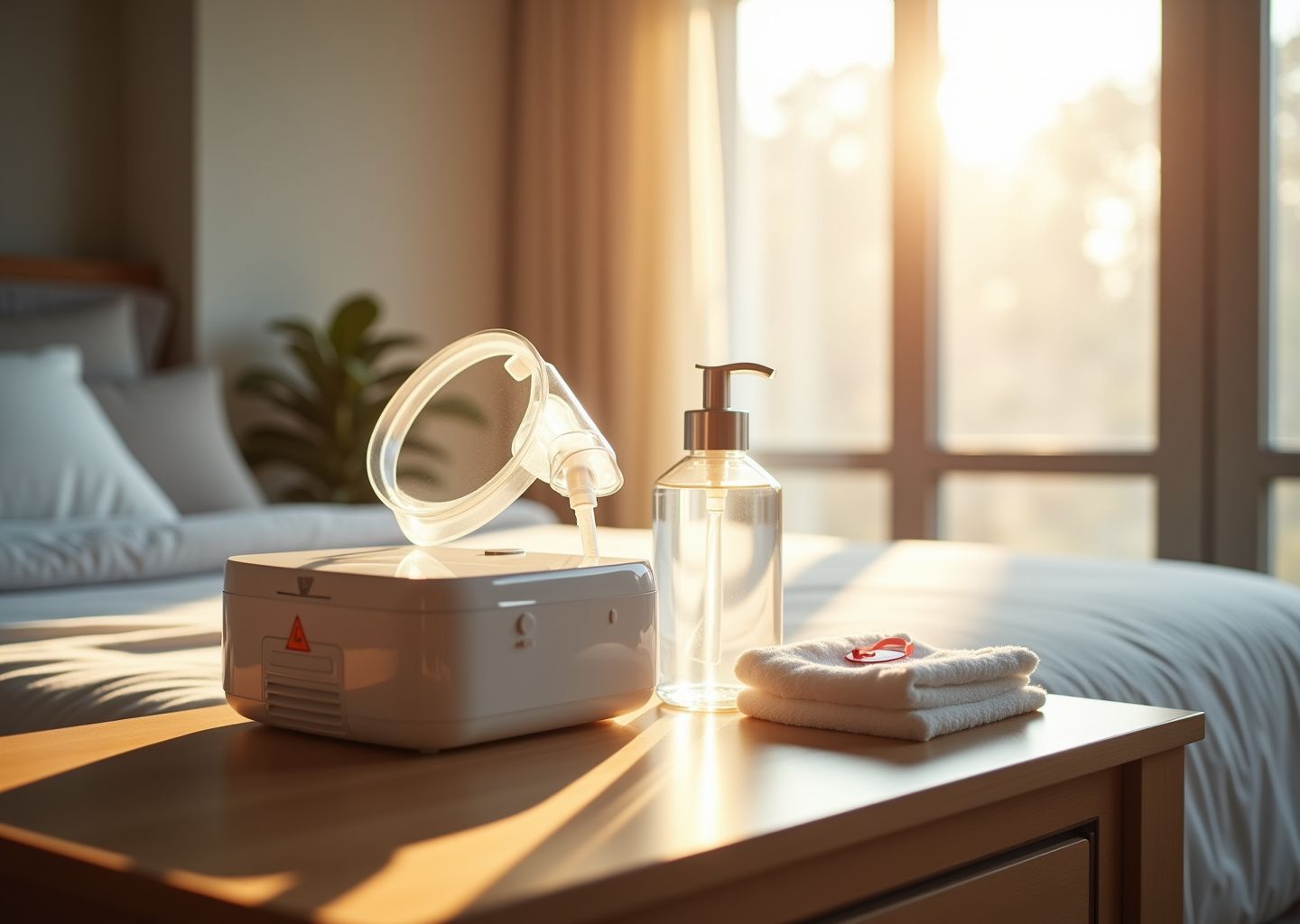
Ozone-based CPAP cleaners promise fast disinfection, but safety and effectiveness are debated. This article examines FDA guidance, manufacturer recommendations, scientific evidence, and practical cleaning best practices so you can protect your health and your equipment. Read on to learn risks, real-world effectiveness, and clear steps to keep CPAP therapy comfortable and effective every night, and when to consult a clinician.
How ozone CPAP cleaners work and why people use them
The regulatory status of ozone CPAP cleaners in the United States is strict and clear. As of late 2025, the U.S. Food and Drug Administration (FDA) has not authorized any consumer device that uses ozone gas to clean or disinfect CPAP machines. This position has remained consistent through several safety communications and enforcement actions over the last few years.
Understanding how the FDA views these products helps you make safer decisions for your health. The agency classifies devices that claim to kill bacteria or viruses on medical equipment as medical devices themselves. This classification means manufacturers must prove their products are safe and effective before selling them.
How the FDA Evaluates Medical Cleaners
The FDA uses a specific process to clear medical devices for the market, often through a 510(k) submission. In this process, a manufacturer must submit data demonstrating that their device is substantially equivalent to a legally marketed device. For a CPAP cleaner, the company would need to prove two main things: first, that the device actually kills germs as claimed; and second, that it does not harm the user or the equipment.
The Difference Between Cleared and Unapproved
A “cleared” device has undergone FDA review. The agency has looked at the performance data and agreed that the device is safe for its intended use. An “unapproved” device is one that is sold without this review. Many ozone cleaners currently on the market fall into this unapproved category. They are often sold with marketing language that sounds official, using terms like “lab tested” or “sanitizer.” However, these marketing terms do not mean the FDA has reviewed or authorized the product.
The FDA has stated explicitly that they have not received performance data from manufacturers showing that ozone gas can safely and effectively clean the inside of CPAP devices. Without this data, the agency cannot verify that these machines kill pathogens without leaving behind harmful chemicals.
Safety Communications and Warning Letters
The FDA has issued multiple warnings regarding these products. A significant safety communication was released in November 2023, warning consumers about the potential risks associated with ozone and UV light products. The agency pointed to reports of adverse events from users, including complaints of asthma attacks, headaches, and difficulty breathing after using ozone cleaners.
Recent Enforcement Actions
The regulatory pressure escalated in 2024. FDA cracks down on ozone cleaners for CPAP machines by sending warning letters to companies selling unauthorized devices. In August 2024, the FDA issued warnings to four specific companies regarding the marketing of unapproved medical devices. The agency took issue with claims that these products could eliminate 99% or 99.99% of bacteria and viruses. The FDA requires robust evidence to support such high-level disinfection claims, which the manufacturers had not provided.
These warning letters are public documents serving as notice that companies are violating federal law. For consumers, these letters are a red flag indicating that the safety claims on the box have not been validated by federal regulators.
Why the FDA Has Not Cleared These Devices
The hesitation to clear these devices stems from the properties of ozone itself. Ozone is a toxic gas. It is effective at killing bacteria because it is chemically reactive. That same reactivity makes it dangerous to humans.
Leakage and Residual Ozone Risks
FDA laboratory testing revealed concerning results regarding exposure. The agency ran tests on several common ozone cleaner models in small rooms to mimic a home bathroom. They found that ozone often leaked out of the cleaning chamber and into the room, sometimes exceeding safe limits for human exposure.
The testing also looked at “residual ozone”—the gas left inside your CPAP tubing and mask after the cleaning cycle ends. Manufacturers typically recommend a waiting period before you use your mask. However, FDA tests showed that ozone levels inside the tubing remained dangerously high even after these recommended waiting times. If you put the mask on too soon, you could inhale a concentrated dose of ozone directly into your lungs.
CPAP Manufacturer Responses and Warranties
The companies that build CPAP machines (OEMs) have responded strongly to the rise of ozone cleaners. Major manufacturers like ResMed and Philips generally advise against using ozone devices. Their user manuals typically recommend cleaning with mild soap and water.
Warranty and Damage Concerns
Using an ozone cleaner can have financial consequences. Many CPAP manufacturers state that damage caused by ozone devices is not covered under warranty. This is because ozone can accelerate the breakdown of materials, causing silicone seals to crack and foam components to degrade.
The issue of foam degradation became highly visible during the massive Philips Respironics recall. The FDA noted that the use of ozone cleaners could worsen the breakdown of the sound abatement foam in those recalled machines. This creates a dual risk: potential respiratory irritation from the ozone itself and potential exposure to degraded foam particles.
What Consumers Should Look For
If you are shopping for cleaning supplies, you need to know how to verify claims. Do not rely solely on the product description on a retail website.
Verifying FDA Status
You can check the status of any medical device on the FDA website. Look for the “510(k) Premarket Notification” database. If a manufacturer claims their device is FDA cleared, they should be able to provide a 510(k) number. If they cannot provide this number, the device is likely not cleared.
Reporting Adverse Events
The FDA relies on patient data to track safety issues. If you experience a headache, coughing, or breathing problems after using a cleaning device, you should report it. The FDA’s MedWatch program allows consumers to submit reports directly. These reports helped trigger the safety communications in 2023 and the enforcement actions in 2024.
Summary of Current Status
The landscape in late 2025 remains restrictive for these devices. Do You Need a Device That Claims to Clean a CPAP Machine? – FDA consumer updates continue to recommend against their use. The agency emphasizes that soap and water remain the safest and most effective way to clean your equipment. No ozone device has yet surmounted the hurdle of proving it is safe for home use. Until a manufacturer can prove that their device prevents ozone leakage and eliminates residual gas effectively, the FDA is unlikely to grant clearance.
Regulatory posture and FDA statements to know
If you walk into a medical supply store or browse online marketplaces today, you will still see ozone CPAP cleaners for sale. They often sit right next to masks and tubing, looking like essential medical accessories. However, the regulatory reality behind these devices is starkly different from the marketing gloss. The FDA has maintained a consistent and rigorous position: the agency has not authorized any consumer device using ozone gas to clean, sanitize, or disinfect CPAP machines.
The FDA’s Official Stance
The core of the regulatory issue is classification. Under US law, a product that claims to clean or disinfect a medical device (like a CPAP machine) is itself considered a medical device. This means it must undergo FDA review before it can be legally marketed. To date, no manufacturer of ozone-based CPAP cleaners has successfully cleared this hurdle.
The agency’s concerns are not theoretical. In their own laboratory testing, FDA researchers found that ozone levels inside CPAP tubing could remain dangerously high even after the cleaning cycle and the manufacturer’s recommended waiting period ended.
Understanding 510(k) Clearance vs. Registration
A common point of confusion for buyers is the terminology used on product packaging. You might see a sticker that says “FDA Registered.” This is very different from “FDA Cleared” or “FDA Approved.”
- FDA Registration
This is an administrative step. It simply means the company has told the FDA they exist and are selling products. It does not imply the FDA has tested the device or validated its safety. - FDA Clearance (510(k))
This is the standard required for medical devices. To get this, a manufacturer must submit a 510(k) premarket notification. They must prove their device is substantially equivalent to a legally marketed device and provide data on safety and efficacy.
For ozone cleaners, the FDA requires valid scientific evidence showing that the device generates enough ozone to kill pathogens but does not leak toxic gas into the user’s bedroom or leave harmful residue in the mask. Because ozone is a toxic gas by definition—that is how it kills bacteria—balancing safety with efficacy in a bedroom setting is incredibly difficult. Consequently, you will not find a 510(k) summary for these consumer ozone devices.
Adverse Event Reporting
The FDA does not just rely on lab tests; they also track real-world data through the MAUDE (Manufacturer and User Facility Device Experience) database. Between 2017 and 2019 alone, the FDA received 11 specific adverse event reports linked to ozone cleaners. Users reported headaches, difficulty breathing, asthma attacks, and nasal irritation. These are classic symptoms of ozone inhalation.
More recently, reports have appeared regarding material damage. Ozone is a powerful oxidizer. It attacks rubber, silicone, and certain foams. This leads us to the other major regulatory player in this story: the CPAP manufacturers themselves.
CPAP Manufacturer Policies and Warranty Voids
The companies that build CPAP machines (OEMs like ResMed, Philips Respironics, and Fisher & Paykel) have taken a hard line against ozone cleaners. Their regulatory filings and user manuals now explicitly warn against using ozone. This is not just about protecting their market share; it is about device integrity.
OEM Stances on Ozone Cleaning
The following table summarizes the general posture of major CPAP manufacturers regarding third-party ozone devices as of late 2025.
| Manufacturer Position | Reasoning | Consumer Impact |
|---|---|---|
| Strictly Prohibited | Ozone accelerates the degradation of silicone seals, gaskets, and sound-dampening foam. | Use of ozone devices typically voids the machine’s warranty. |
| Safety Warnings | Potential for residual ozone to be inhaled by the patient if not purged correctly. | Manufacturers issue formal advisories recommending only mild soap and water. |
| Recall Context | Ozone was identified as a potential contributing factor in the breakdown of sound abatement foam in previous massive recalls. | Users with recalled devices were specifically instructed to stop using ozone cleaners immediately. |
The connection to the Philips Respironics recall is particularly significant. The FDA noted that the use of ozone cleaners may have exacerbated the degradation of the PE-PUR sound abatement foam, which crumbled and released toxic particles into the air path. This situation highlighted the danger of using a reactive gas on materials that were never designed to withstand it.
Navigating the “Grey Market”
Despite these warnings, you can still buy these devices. Manufacturers often use careful language to skirt regulations. They might market the device as a “sanitizer” for “general equipment” rather than specifically for medical devices, or they might claim to be “resellers” to avoid manufacturer liability. Some have responded to FDA pressure by adding adapters or changing their instructions to increase airing-out times.
However, a change in instructions does not equal FDA clearance. The FDA warns against certain at-home CPAP cleaning machines regardless of these minor product updates. The fundamental mechanism—filling a chamber or tube with toxic gas in a residential bedroom—remains the same.
What Consumers Should Look For
If you are evaluating a cleaning product, look for the following specific regulatory markers. Do not rely on the manufacturer’s website alone.
- Check the FDA 510(k) Database:
Go to the FDA website and search the 510(k) Premarket Notification database. If the device name does not appear there, it is not cleared for medical use. - Read the User Manual for Your CPAP:
Check the “Cleaning and Maintenance” section of your specific CPAP machine’s manual. If it says “do not use ozone” or “warranty void if used with ozone,” that is a binding operational constraint. - Look for Safety Communications:
Search for the product name alongside terms like “FDA warning letter” or “safety communication.” The FDA questions the safety of CPAP cleaners that use ozone and publishes these findings publicly.
Health and equipment risks plus evidence-based cleaning alternatives
We need to look closely at what happens when you introduce ozone into your bedroom environment. While the idea of a machine that automatically sanitizes your equipment sounds like a dream for anyone tired of daily washing, the biological and mechanical reality is much more complex. The FDA has been very specific about these risks, and understanding them is the only way to make a safe choice for your sleep therapy.
Respiratory Health Risks and Ozone Exposure
The primary concern with ozone cleaners isn’t just about whether they kill bacteria, but where that ozone goes during and after the cycle. Ozone (O3) is a toxic gas. It is chemically unstable, which is exactly why it is effective at killing pathogens—it reacts violently with organic material. Unfortunately, your lungs are also made of organic material.
When you use an ozone generator, the gas can leak into your room or linger inside your CPAP tubing and mask long after the cleaning cycle finishes. The FDA found that ozone levels inside tubing can remain dangerously high even after the waiting periods recommended by manufacturers. If you put that mask on while ozone is still present, you are inhaling a respiratory irritant directly into your airways.
Immediate Physical Reactions
According to FDA adverse event reports, users have experienced coughing, difficulty breathing, nasal irritation, headaches, and even asthma attacks. These aren’t just minor annoyances; they are signs of respiratory distress. The EPA and OSHA have established strict limits for ozone exposure in occupational settings because ground-level ozone is a known pollutant that damages lung tissue. For people with existing respiratory conditions like asthma, COPD, or chronic bronchitis, inhaling residual ozone from a CPAP mask can trigger bronchoconstriction—a tightening of the airways that makes it harder to breathe.
How Ozone Attacks CPAP Materials
Beyond your health, there is the issue of the equipment itself. CPAP masks, tubing, and machine seals are engineered from specific medical-grade materials like silicone, polycarbonate, and various rubbers. These materials are designed to be durable, but they are generally tested against mild soap, water, and skin oils—not high concentrations of reactive gas.
Oxidative Degradation Mechanisms
Ozone accelerates the aging process of these materials through oxidation. Think of it like leaving a rubber band out in the hot sun for weeks; it becomes brittle and cracks. Ozone causes silicone cushions to lose their elasticity much faster than normal. When a cushion loses its “give,” it can no longer form a reliable seal against your face. This leads to air leaks, which compromises your therapy pressure and causes the machine to work harder to compensate.
Foam and Internal Components
The risk extends to the inside of the machine. Some CPAP devices use sound-dampening foam to keep the motor quiet. The FDA has warned that ozone can worsen the breakdown of this foam. This is particularly relevant given the massive recalls we saw in the early 2020s regarding foam degradation. Using an ozone cleaner can void the warranty on many CPAP machines because manufacturers classify it as “improper use” due to this known damage potential.
Evidence-Based Cleaning Alternatives
If ozone is risky, the question remains: how do you keep your equipment safe without spending hours at the sink? The truth is that the “old fashioned” way is still the only method universally approved by medical device manufacturers and clinical guidelines.
Why Soap and Water Works Best
Ozone and UV light have a major limitation: they cannot remove physical debris. If you have facial oils, dead skin cells, or saliva on your mask, ozone might kill the bacteria on top of that layer, but the grime stays there. That grime becomes a breeding ground for new bacteria the moment you put the mask back on. Physical washing with soap and water actually removes the organic material, leaving nothing for bacteria to eat.
Recommended Cleaning Schedule
You do not need to sterilize your equipment like a surgical tool; you just need to keep it hygienically clean.
- Daily: Wipe down your mask cushion with a damp cloth or a CPAP-specific wipe (alcohol-free and unscented) to remove facial oils. Empty your humidifier chamber and let it air dry.
- Weekly: This is the deep clean. Fill a basin with warm water and a mild, clear liquid dish soap. Submerge your mask frame, cushion, and tubing. Agitate them gently to let the soapy water flow through. Rinse thoroughly with warm water and hang the tubing over a shower rod to dry.
- Humidifier Care: Once a week, soak the humidifier chamber in a solution of one part white vinegar to three parts water for 30 minutes to dissolve mineral deposits, then rinse well. Always use distilled water for therapy to prevent these deposits in the first place.
Evaluating Other Sanitizing Methods
You might see other devices on the market, particularly those using UV-C light. While UV light is used effectively in hospitals, home units have limitations. UV light only kills what it touches. If the light is blocked by a shadow—for example, inside the curves of a hose or the crevices of a mask—bacteria in those shadows survive. The FDA has not cleared these devices for CPAP cleaning either, noting risks of eye injury if the shielding is inadequate.
Hydrogen Peroxide and Heat
Some industrial settings use vaporized hydrogen peroxide, but this is not currently available or safe for home CPAP use. Heat sanitization is another method, but household temperatures required to kill bacteria can warp the precision plastics of your mask.
Practical Replacement Timelines
Cleaning can only extend the life of your gear so far. To maintain a good seal and effective therapy, stick to a replacement schedule. Most insurance plans in the U.S. follow a standard allowance schedule because materials degrade over time regardless of how well you clean them.
- Mask Cushions/Pillows: Replace every 2-4 weeks. Silicone softens and absorbs oils, leading to leaks.
- Disposable Filters: Replace every 2 weeks. Do not wash these; they trap dust and allergens and need to be tossed.
- Tubing: Replace every 3 months. Micro-tears can harbor bacteria.
- Mask Frame and Headgear: Replace every 6 months. Straps stretch out, leading to overtightening and discomfort.
- Humidifier Chamber: Replace every 6 months to a year, or sooner if you see pitting or cracks.
By sticking to a manual cleaning routine and respecting replacement schedules, you avoid the chemical risks of ozone and ensure your therapy is actually working. It requires a few minutes of effort, but it guarantees that the air you breathe all night is safe. FDA cracks down on ozone cleaners for CPAP machines precisely because these safety basics are often compromised by the promise of automation.
Frequently asked questions about ozone CPAP cleaners
We included this FAQ section because CPAP safety can be confusing. You likely have specific, urgent questions about the equipment you sleep with every night. These answers are direct, based on current FDA guidance as of late 2025, and focus on keeping you safe and your therapy effective.
Are ozone CPAP cleaners FDA-approved or cleared for home use?
The short answer is no. The FDA has not authorized any consumer device that uses ozone gas to clean, sanitize, or disinfect CPAP machines or accessories. While you might see marketing language that sounds official, no ozone cleaner has received the necessary 510(k) clearance to prove it is safe and effective for home use. Some manufacturers might say their facility is “FDA Registered,” but this is an administrative step and does not mean the FDA has tested the device or deemed it safe for you to use.
Will ozone damage my mask, tubing, or machine?
Yes, ozone is likely to damage your equipment over time. Ozone is a powerful oxidizing agent that attacks the materials making up your CPAP gear. It causes silicone and rubber to become brittle, crack, or lose elasticity. The risk extends to the inside of the machine, where ozone can worsen the breakdown of sound-dampening foam, a central issue in previous massive recalls. Consequently, using an ozone cleaner can void your machine’s warranty.
Can ozone eliminate viruses, including the coronavirus, on CPAP equipment?
Manufacturers often claim 99% or 99.99% effectiveness against pathogens, but the FDA questions these numbers for home-use devices. There is a critical difference between killing a virus in a controlled lab test and cleaning a dirty CPAP mask in your bedroom. Ozone is a gas and cannot physically remove dirt, skin oils, saliva, or mucus. The FDA states that ozone devices do not remove visible soil. If a virus is trapped underneath a layer of body oil, the gas may not reach it.
Is it safe to sleep using equipment treated with ozone?
There are significant safety concerns regarding residual gas. The FDA found that ozone can linger inside CPAP tubing and machines for hours after the cleaning cycle finishes, even if you follow the manufacturer’s “waiting period.” If ozone gas is still trapped inside when you put your mask on, you inhale it directly into your lungs. This can cause immediate respiratory irritation, including coughing, difficulty breathing, and asthma attacks.
What should I do if I’ve already used an ozone cleaner on my CPAP?
If you have used an ozone cleaner, stop using the device immediately. Take your mask, tubing, and water chamber and wash them thoroughly with warm, soapy water to remove chemical residue. Run your CPAP machine for 10 to 15 minutes without the mask attached to flush out any remaining gas from the internal motor and sound abatement foam. If the air coming from the tube smells like chlorine or a “sharp” electric scent, keep running it until the odor is gone. Inspect your silicone seals and tubing; if they look discolored or feel brittle, replace them.
How should I clean my CPAP safely each day and week?
The safest and most effective cleaning method is the one recommended by your device manufacturer: mild soap and water. This physically removes the bacteria and food sources (oils) that pathogens need to survive. Refer to the detailed “Recommended Cleaning Schedule” in the previous section for step-by-step instructions on daily wiping and weekly soaking.
When should I contact my sleep clinician or device manufacturer?
Contact your doctor immediately if you experience new or worsening respiratory symptoms, such as a persistent cough, shortness of breath, frequent headaches upon waking, or sinus irritation. Contact the device manufacturer or your durable medical equipment (DME) provider if you notice an increase in noise from your motor, black debris in your tubing or water chamber (a sign of foam disintegration), or if the machine fails to hold pressure. The FDA continues to monitor these issues, and reporting your experience helps them track the safety of these unauthorized devices.
Conclusions and practical next steps
We have looked at the science, the regulatory warnings, and the real-world risks. Now it is time to figure out exactly what to do with that information. It is natural to want a shortcut for cleaning CPAP equipment. Scrubbing a mask and hose every morning is tedious, and the promise of a machine that does it for you with the push of a button is incredibly tempting. However, the evidence we have seen from the FDA and independent testing paints a complicated picture.
As of late 2025, the core issue remains the same: the FDA has not authorized these devices for home use because manufacturers haven’t proven they are safe for you or your equipment. The gas that kills bacteria can also irritate your lungs and break down the silicone and foam in your machine.
Here is a practical guide on how to handle this, broken down by where you stand right now.
If you are thinking about buying an ozone cleaner
You might see ads online or in stores claiming a device “sanitizes” or “disinfects” your CPAP in minutes. Before you spend your money, take these steps.
Check for FDA authorization
Do not rely on the manufacturer’s website alone. Look for an FDA 510(k) clearance number. If the product claims to be a medical device cleaner but hasn’t been cleared, the FDA considers it unapproved. Be very skeptical of claims like “99.9% effective” if there is no regulatory data backing that up.
Read the warranty on your CPAP machine
Most major CPAP manufacturers (like ResMed or Philips) have specific clauses in their warranties. Many explicitly state that using ozone or ozone-generating devices can void your warranty. They do this because they know ozone can degrade the internal components of the blower motor and sound-dampening foam.
Understand what it doesn’t do
Even if an ozone cleaner kills bacteria, it does not clean. It cannot remove facial oils, saliva, dead skin cells, or makeup. You will still need to physically wash your mask and tubing to get rid of that “grime.” If you don’t, the ozone is just sanitizing the dirt sitting on your mask.
If you already use an ozone cleaner
If you own one of these devices, you are not alone. Many people bought them before the safety communications became widespread. If you choose to continue using it, you need to take extra precautions to minimize your health risks.
Increase the airing-out time
FDA testing showed that ozone can linger in your tubing and machine for hours, often longer than the manufacturer’s recommended waiting period. If the manual says to wait one hour before using your CPAP, wait two or three. Never use your CPAP immediately after a cleaning cycle.
Ventilate the room
These devices can leak ozone into the surrounding air. Do not run the cleaner in a small, closed bathroom or right next to your bed while you are in the room. Run it in a well-ventilated area, ideally with a window open or a fan on, and stay out of that room while the cycle is running.
Watch for material damage
Ozone accelerates the aging of plastics and silicones. Inspect your mask cushion and tubing weekly. If the silicone feels sticky, looks yellow, or has small cracks, replace it immediately. Using degraded equipment can lead to air leaks, which compromises your therapy.
FDA cracks down on ozone cleaners for CPAP machines
The safest cleaning routine (The Gold Standard)
If your priority is safety and equipment longevity, the best method is still the one recommended by your device manufacturer. It requires more elbow grease, but it carries zero risk of lung irritation or voided warranties. Stick to the daily wipe-down and weekly soak with warm soapy water detailed in the “Evidence-Based Cleaning Alternatives” section above. Avoid harsh chemicals like bleach, alcohol, chlorine, or scented oils, as these can damage materials or leave harmful residues.
When to take action: A safety checklist
Regardless of your cleaning method, you need to monitor both your health and your equipment. Here is a prioritized list of things to watch for.
- Smell check: If you turn on your CPAP and smell a sharp, pungent odor (often described as smelling like chlorine or a thunderstorm), that is ozone. Do not use the machine. Let it run without the mask on your face for a few minutes to purge the air, or let it sit for another hour.
- Health check: Pay attention to your body. If you start experiencing new or worsening headaches, nasal irritation, coughing, or shortness of breath, stop using the ozone cleaner immediately. These are known side effects of ozone exposure.
- Equipment check: Look at the foam seals and silicone parts. If you see black particles or if the foam is crumbling, stop using the machine. This was a major issue in previous years and can be exacerbated by ozone.
- Consult a clinician: If you have chronic respiratory issues like asthma or COPD, talk to your sleep specialist. They may advise you to strictly avoid any ozone-generating devices because your lungs are more sensitive to irritation.
Safe Ozone and UV CPAP Cleaners: Effective Hygiene for Your CPAP Device
Balancing comfort and safety
We all want our CPAP therapy to be as hassle-free as possible. It is the key to getting a good night’s sleep and staying healthy. But infection control shouldn’t come at the cost of your respiratory health or the integrity of your expensive machine.
The most practical path forward is to stick to the basics. Soap and water are effective, safe, and approved by every manufacturer. If you absolutely must use an automated cleaner, treat it with extreme caution—ventilate the room, air out the equipment longer than instructed, and inspect your gear constantly. Your lungs are already working hard to help you sleep; they don’t need the extra challenge of filtering out toxic gas. Keep it simple, keep it clean, and you will sleep better for it.
References
- FDA cracks down on ozone cleaners for CPAP machines — The FDA sent warning letters to four companies selling devices that claim to clean CPAP machines, but have not been cleared or approved by the agency.
- FDA Warns Against Certain At-Home CPAP Cleaning Machines — Exposure to ozone from these devices could increase a person's risk of getting a respiratory illness or aggravate chronic conditions like asthma …
- The truth about FDA's Warning on SoClean and Ozone CPAP … — The FDA advises users to avoid relying solely on ozone-based cleaners and instead focus on proper washing techniques. The Best Way to Clean CPAP …
- FDA questions safety of CPAP cleaners that use ozone or ultraviolet … — The FDA has released a safety communication about concerns related to CPAP cleaning devices that use ozone or ultraviolet light.
- Warning About Cleaning CPAP Devices With Ozone Gas, UV Light — A recent FDA safety communication has warned patients and health professionals that the agency has not cleared any devices that use ozone gas …
- Safe Ozone and UV CPAP Cleaners: Effective Hygiene for Your … — The FDA has taken a clear stance on ozone and UV CPAP cleaners: they haven't authorized these devices for cleaning, sanitizing, or disinfecting …
- SOCLEAN INC. SOCLEAN OZONE CPAP CLEANING DEVICE — I have since looked up information and found that the fda doesn't recommend ozone producing devices at all and that soclean and other devices …
- Do You Need a Device That Claims to Clean a CPAP Machine? – FDA — The FDA has not received performance data or evidence from manufacturers that says ozone gas and UV light can clean the inside surface of CPAP …
- Four companies warned for selling unauthorized CPAP cleaners — Three of the warning letters noted that the companies claimed that their products are 99% or 99.99% effective at cleaning CPAP machines, in some …
Legal Disclaimers & Brand Notices
The content provided in this article is for informational purposes only and does not constitute professional medical advice, diagnosis, or treatment. Always seek the advice of your physician or another qualified healthcare provider with any questions you may have regarding a medical condition, the use of medical devices, or the implementation of new health-related routines.
All product names, logos, and brands mentioned in this text are the property of their respective owners. All company, product, and service names used in this article are for identification purposes only. Use of these names, logos, and brands does not imply endorsement or affiliation.
