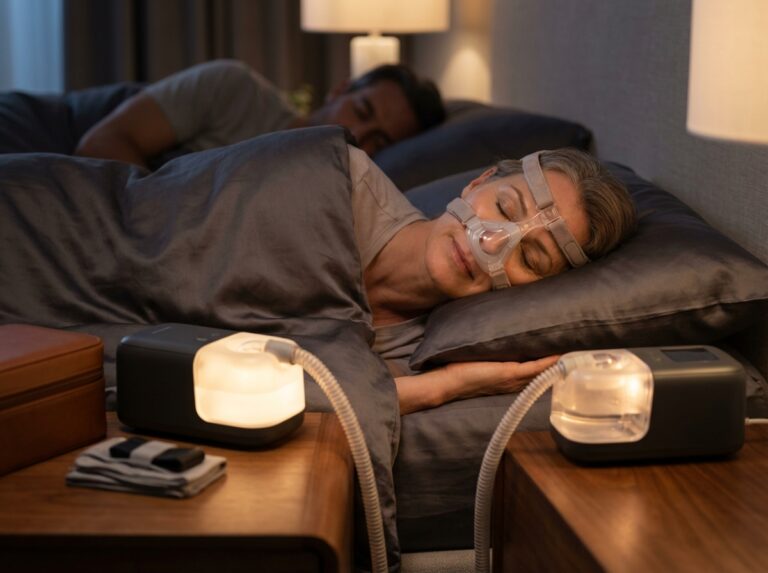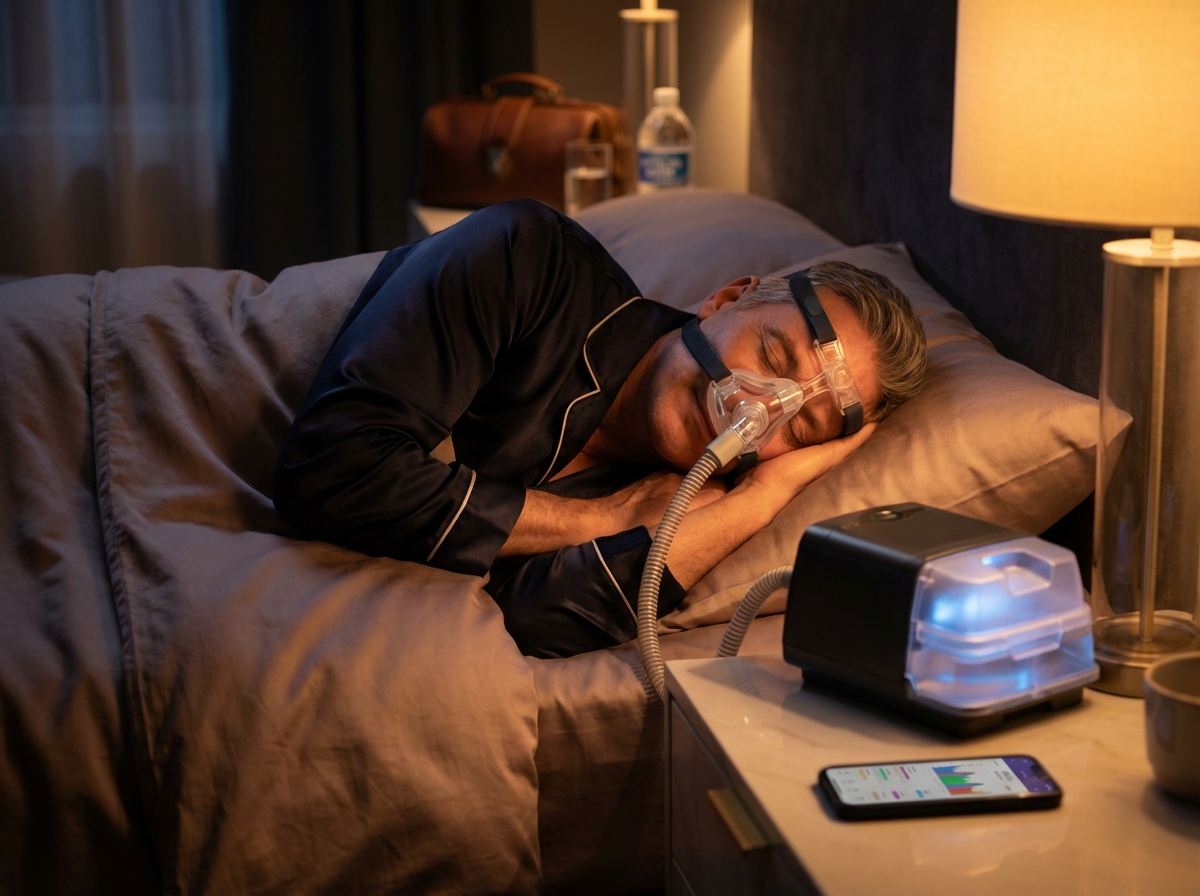
CPAP therapy is the most common and effective treatment for obstructive sleep apnea. This guide walks the newly diagnosed through what CPAP is, how it works, how to get fitted, which machines and masks to consider, comfort strategies to boost nightly use, and troubleshooting so therapy becomes comfortable, consistent, and health‑improving.
Understanding CPAP therapy and how it works
CPAP therapy is the primary treatment for obstructive sleep apnea. It stands for continuous positive airway pressure. The machine uses a motor to blow a constant stream of pressurized air. This air travels through a tube into a mask that you wear while you sleep. The pressure acts as an air splint. It keeps the soft tissues in your throat from collapsing. When you sleep, your muscles relax. For people with sleep apnea, this relaxation causes the airway to close. The pressurized air pushes against these tissues. It ensures the path for oxygen stays open all night.
The airway collapse happens because of physics. Negative pressure during inhalation pulls the throat walls inward. The CPAP machine creates positive pressure to counteract this suction. It stabilizes the upper airway and prevents the drop in oxygen levels. It stops the brain from waking up to restart breathing. This process allows you to stay in deep sleep stages longer.
There are three main types of positive airway pressure therapy.
Fixed Pressure CPAP
This device stays at one specific pressure level all night. It is the most common choice for standard sleep apnea. Your doctor finds the right setting during a sleep study. The pressure is measured in centimeters of water. A typical setting might be ten centimeters of water.
AutoPAP or APAP
These machines adjust the pressure breath by breath. They use a range such as 4 to 20 centimeters of water. The machine senses when your airway is narrowing. It increases the air flow when needed. It lowers the pressure when you are breathing fine. This is helpful if your needs change when you roll onto your back or if you have allergies.
BiPAP or Bilevel PAP
This version uses two different pressures. One is higher for when you breathe in. The other is lower for when you breathe out. Doctors prescribe this for people who need very high pressure. It is also used for patients with lung issues who find it hard to exhale against a constant flow of air.
| Therapy Type | Function | Clinical Indication |
|---|---|---|
| Fixed CPAP | Constant pressure | Uncomplicated sleep apnea |
| AutoPAP | Variable pressure | Positional apnea or weight changes |
| BiPAP | Dual pressure | High pressure needs or lung disease |
Alternative Therapies for Mild Cases
While CPAP is the gold standard, it is not the only option. Some people with mild sleep apnea find success with oral appliances that a dentist fits to keep the jaw forward and the airway open. Positional therapy devices can also help if you only experience apnea while sleeping on your back. If you find CPAP impossible to use after several weeks of trying, schedule a follow-up with your sleep specialist to discuss these alternatives.
Clinicians look at specific numbers to see if the therapy works. AHI is the main number doctors use. It stands for the apnea hypopnea index. It tracks how many times your breathing stops for ten seconds or more per hour. A score under five is the goal for therapy. ODI is the oxygen desaturation index. It shows how many times your blood oxygen drops. Clinicians also look at the arousal index. This counts how many times your sleep is interrupted. Oxygen saturation shows how much oxygen is in your blood.
A titration study finds your ideal pressure. In a lab, a technician watches your sleep stages. They increase the pressure until your snoring and apneas stop. This identifies the lowest pressure that works for you. Some people do this at home with an auto titrating machine. The machine collects data over several nights. Your doctor then sets a fixed pressure based on that data.
The benefits of therapy are significant. You will likely feel more alert during the day. Your concentration will improve. Your mood might stabilize. Resmed research from June 2025 shows that consistent use reduces the risk of heart related hospital visits by 22 percent. It helps lower your blood pressure. It reduces the strain on your heart.
Some people feel bloated from swallowing air. This is called aerophagia. You might have a dry mouth or a stuffy nose. The mask can leave red marks on your face. Most of these problems have simple fixes. You can use a humidifier. You can adjust the mask straps. You will work with a sleep specialist. They interpret your sleep study. They write the prescription. A durable medical equipment provider or DME sets up your machine. They show you how to use the mask. They track your data for insurance.
The first two weeks are a period of adjustment. You might struggle with the mask seal. You might find the air pressure uncomfortable. This is normal. Most patients need about a month to feel fully comfortable. You should try to use the machine for at least four hours every night. This helps your brain get used to the new way of breathing. You will likely have a follow up call in the first week to check on your progress. Your DME provider will help you choose the right mask. They provide replacement filters. They send your usage reports to your doctor. This ensures your therapy remains effective over time.
From diagnosis to prescription and coverage logistics
The journey to better sleep starts when you or a partner notice signs like heavy snoring, gasping, or extreme daytime fatigue. Your doctor will evaluate these symptoms to see if you need a sleep study. This is the first major step in the diagnostic process. You will likely choose between two types of tests. A home sleep apnea test is a portable device you use in your own bed. It measures your heart rate, oxygen levels, and breathing patterns. These tests are convenient and work well for people with a high chance of having obstructive sleep apnea.
An in-lab polysomnography is the other option. This study happens in a specialized sleep center. It is more comprehensive because it records brain waves, eye movements, and muscle activity. Doctors prefer this method if they suspect you have other sleep disorders like restless leg syndrome. It is also necessary for patients with certain heart or lung conditions. While a home test is easier to schedule, the in-lab study provides the most accurate data for complex cases. Home tests do not use brain wave monitoring, so they might underestimate your sleep time. This can sometimes lead to a lower apnea score than an in-lab study would show.
The Prescription Requirements
After your sleep study, a specialist reviews the data to determine your apnea-hypopnea index. This number represents how many times your breathing stops or slows down per hour. If the results show you have sleep apnea, the doctor writes a prescription for therapy. This document must include your specific diagnosis and the recommended type of machine. It will state whether you need a fixed pressure CPAP or an auto-titrating APAP device. The prescription also lists the required pressure settings, mask type, and accessories like a humidifier. You need this paperwork to get equipment through insurance. Most providers require a signed order and a copy of the full sleep study report before they can process your request.
Establishing Your Pressure Settings
Finding the right air pressure is vital for comfort. Some patients undergo a titration study in the lab. During this session, a technician slowly increases the pressure while you sleep to find the level that keeps your airway open. Another common method involves using an auto-titrating machine at home. These devices use internal sensors to adjust the pressure breath by breath. After a week or two, your doctor reviews the download data. They often look at the 95th percentile pressure to decide on a permanent setting. This ensures the pressure is high enough to be effective but low enough to remain comfortable. Modern machines upload this data to the cloud so your care team can monitor your progress remotely.
Insurance and Medicare Compliance
Navigating insurance coverage requires understanding the compliance rules. Medicare and most private insurers follow a 90 day trial period. To keep the machine, you must prove that you are using it regularly. This is known as the four hour rule. You must use the device for at least four hours per night on 70 percent of the nights during a 30 day window. This means hitting the goal for 21 out of 30 consecutive days. Your machine automatically tracks this data and sends it to your provider. If you do not meet these requirements, the insurance company may deny coverage for the device and future supplies. Medicare Part B usually covers 80 percent of the cost. You are responsible for the remaining 20 percent unless you have supplemental insurance.
If your insurance denies coverage, it is often due to missing paperwork or insufficient usage data. Ask for a copy of the denial letter to see the specific reason. Often you just need to provide a more recent sleep study or a signed prescription. Contact your doctor and your insurance advocate to start the appeal process immediately.
Durable Medical Equipment Logistics
Your equipment comes from a durable medical equipment provider. They act as the middleman between you, your doctor, and the insurance company. They require specific documentation before they can give you a machine. This includes the sleep study report, a signed prescription, and notes from a face to face clinical visit. The provider will also help you select a mask and show you how to maintain the equipment. They are responsible for billing your insurance and sending you replacement supplies like filters and cushions.
Supply Replacement Schedule
| Item | Replacement Frequency |
|---|---|
| Mask Cushions or Pillows | Every 1 to 3 months |
| Disposable Filters | Every month |
| Tubing and Water Chambers | Every 3 to 6 months |
| Mask Frames and Headgear | Every 6 months |
Communication and Safety
Stay in close contact with your provider to avoid delays. Ask for copies of all your medical records. This helps if you ever need to switch doctors or if your machine is part of a recall. Always register your device with the manufacturer. This ensures you receive safety alerts immediately. If you struggle with the pressure or the fit of your mask, call your provider within the first two weeks. Most plans allow for a mask exchange early in the process. Taking these steps early will help you get the most benefit from your therapy. Be proactive with your insurance company to confirm your out of pocket costs before you pick up your machine. This prevents unexpected bills later in your treatment.
Choosing the right mask and getting a proper fit
Finding the right mask is the most personal part of your treatment. It is the only part of the equipment that you actually wear. If the mask is uncomfortable, you will not use the machine. This is why getting the fit right matters more than the machine settings themselves. Most people who quit therapy do so because of a bad mask fit. You have many options to ensure this does not happen to you. Recent data from 2025 shows that 87% of people reported that their restless sleep improved once they found the right setup.
Nasal Pillows
These are the smallest masks available. They use soft silicone inserts that sit at the entrance of your nostrils. They are excellent if you feel claustrophobic. You can wear glasses or read while wearing them. They work best for people with minimal facial hair. They are not ideal if your prescribed pressure is very high. High pressure through such small openings can cause nasal irritation. They are also difficult to use if you breathe through your mouth during sleep.
Nasal Masks
A nasal mask covers your entire nose. It creates a seal from the bridge of your nose to your upper lip. It is more stable than nasal pillows. It handles higher pressure settings well. This style is a great middle ground for side sleepers. It provides a secure seal without covering your mouth. If you have a deviated septum or frequent congestion, this might feel restrictive.
Full Face Masks
These masks cover both your nose and your mouth. They are the standard choice for mouth breathers. If you wake up with a very dry mouth, you likely need this style. They are also helpful during allergy season when your nose is blocked. Modern designs are much lighter than older models. Some versions sit under the nose to reduce pressure on the nasal bridge. This prevents the red marks that older masks often caused.
Hybrid Masks
Hybrid designs combine a mouth covering with nasal pillows or a nasal cradle. They do not have a forehead support bar. This makes them feel less bulky. They are perfect for people who need a full face mask but want to maintain a clear field of vision. They work well for users with facial hair because the seal sits lower on the face.
| Mask Type | Best Sleep Style | Main Advantage | Potential Drawback |
|---|---|---|---|
| Nasal Pillows | Active sleepers | Very lightweight | Nasal dryness |
| Nasal Mask | Side sleepers | Stable seal | Bridge irritation |
| Full Face | Mouth breathers | Works with congestion | Bulkier size |
| Hybrid | Glasses wearers | No forehead strap | Complex fitting |
The Step-by-Step Fitting Routine
You should always fit your mask while lying down. Your face shape changes when you move from a sitting to a sleeping position. Gravity pulls your facial muscles differently. Start by loosening all the straps on your headgear. Place the cushion on your face. Connect the headgear. Tighten the lower straps first. They should be snug but not tight. You should be able to fit one finger between the strap and your skin. Tighten the upper straps next. Turn your machine on to your prescribed pressure. If you hear air escaping, gently pull the mask away from your face and let it settle back down. This allows the outer seal to inflate properly.
Solving Common Leak Problems
Air blowing into your eyes is a sign that the top of the mask is too loose. It can also mean the cushion is too large for your nasal bridge. If you have leaks near your chin, the bottom straps might need a small adjustment. Do not overtighten the straps to stop a leak. Overtightening creates pressure sores and red marks. It can actually cause more leaks by crushing the silicone seal. If you have facial hair, a small amount of lanolin cream on the mustache area can help the silicone grip better. Persistent leaks often mean you need a different size or a different mask style entirely.
Accessories for Enhanced Comfort
Mask liners are thin fabric covers that sit between the silicone and your skin. They absorb moisture. They stop the “whistling” sound of small leaks. Silicone sleeves or soft wraps for the headgear straps prevent “strap marks” on your cheeks. If you use a nasal mask but your mouth still drops open, a chin strap can keep your jaw in place. This prevents the air from escaping through your mouth. Using these tools can help you stay consistent.
Working with Your Equipment Provider
When you visit your Durable Medical Equipment (DME) provider, ask to try at least three different masks. Wear each one for five minutes while lying on a bed. Most providers offer a 30-day mask exchange policy. Use this window. If a mask feels fine in the office but hurts after three nights, call them. Document every issue. Note where the red marks appear. Write down the time of night when leaks wake you up. This data helps your clinician justify a different mask type to your insurance company. Keep a log of your leak rates from your machine’s app to show the supplier if the fit is failing.
Maximizing comfort and building consistent nightly use
Getting used to a CPAP mask takes patience. Many people feel anxious when they first put it on. You can start by wearing the mask during the day while you are awake. Try wearing it for thirty minutes while you watch television. Do not turn the machine on yet. This helps your brain accept the feeling of the mask on your face. Once you feel calm, connect the hose and turn on the air. Practice breathing through your nose while you read a book. This desensitization process makes the first night much less stressful.
Adjusting Your Sleep Environment
Your sleep position changes how the mask fits. Side sleepers often find that the pillow pushes the mask to the side. This creates air leaks that blow into your eyes. You can use a specialized CPAP pillow with cutouts. These gaps give the mask room so the seal stays tight. If you prefer your regular pillow, try sleeping on the very edge of it. This keeps the mask hanging off the side. Back sleepers might experience their jaw dropping open. This leads to mouth leaks and a very dry throat. A chin strap can help keep your mouth closed. It ensures the air pressure goes where it belongs. Communication with your partner is vital. Modern machines are quiet, but the sound of a leak can be annoying. Ask your partner to tell you if they hear air escaping. This helps you fix the fit before it ruins anyone’s sleep.
Using Machine Comfort Features
Modern CPAP devices include settings designed to make breathing feel natural. The ramp feature is a great tool for beginners. It starts the air at a very low pressure. The machine slowly increases the pressure over twenty or thirty minutes. This allows you to fall asleep before the full therapeutic pressure kicks in. Another important setting is expiratory pressure relief. Different brands call this EPR or C-Flex. This feature detects when you are breathing out. It momentarily drops the pressure. This makes it much easier to exhale against the incoming air. If you feel like you are fighting the machine, check this setting. Most users find a level of two or three provides the best comfort.
Managing Humidity and Air Quality
Dry air is a common cause of therapy failure. It leads to nasal congestion and a scratchy throat. Most machines have an integrated heated humidifier. You should use distilled water to prevent mineral buildup in the tank. If you are in a situation where distilled water is unavailable, you can use bottled water for a night, but be sure to clean the tank thoroughly with a mixture of water and white vinegar the next day. If your nose feels dry or stuffed up, increase the humidity level. Heated tubing is another essential accessory. It keeps the air warm as it travels to your mask. This prevents condensation from forming inside the tube. Without heated tubing, you might hear a gurgling sound or feel water splashing on your face. This is called rainout. Setting your machine to climate control mode can automate these adjustments based on the room temperature.
Troubleshooting Common Side Effects
Side effects are normal during the first few weeks. You can manage most of them with small adjustments. Aerophagia is the medical term for swallowing air. It causes gas and bloating in the morning. This often happens if the pressure is too high or if you are breathing through your mouth. Lowering the ramp start pressure can help. Nasal congestion can be treated with saline rinses before bed. If you have red marks on your face, the straps are likely too tight. You should be able to fit one finger between the strap and your skin. Mask liners made of soft fabric can also protect your skin from irritation.
| Issue | Possible Solution | When to Call Your Provider |
|---|---|---|
| Dry Mouth | Use a chin strap or switch to a full face mask. | If you wake up with a parched throat or high leak rates daily. |
| Nasal Dryness | Increase the humidifier setting. Use heated tubing. | If you have persistent sinus pain or cannot breathe through your nose. |
| Skin Irritation | Loosen headgear. Use a fabric mask liner. | If you notice the mask is leaking more than usual despite tightening. |
| Bloating | Adjust the EPR settings. Check your sleeping position. | If you still feel very tired after one month of consistent use. |
The Importance of Consistent Use
Insurance providers usually track your usage data. They look for the four-hour rule. This means you must use the machine for at least four hours on seventy percent of nights. Meeting this goal is necessary for continued coverage. Beyond insurance, consistency is the only way to see health benefits. Many patients notice they feel better within the first month. Telemonitoring allows your doctor to see your progress remotely. They can fix pressure settings or identify leaks without you visiting the office. Small changes in your routine lead to big gains in your long-term health.
Selecting and reviewing CPAP machines and accessories
Machine Types and Algorithms
Fixed Pressure vs AutoPAP
Choosing between a fixed pressure CPAP and an AutoPAP or APAP is your first major decision. A fixed CPAP delivers one constant level of air throughout the night. This works well if your pressure needs are stable. An APAP uses an algorithm to sense your breathing. It increases pressure when it detects a collapse and lowers it when you are stable. Many users find APAP more comfortable because it does not push high pressure when it is not needed. Most modern machines are APAP units that can be set to fixed mode if your doctor prefers. This flexibility makes APAP a safer choice for most new users. You should check if the machine uses a proprietary algorithm. Different brands respond to events with varying speeds. Some are aggressive while others are gradual.
Essential Features for Nightly Success
Quiet Operation and Sound Levels
Noise is a common concern for both users and bed partners. Modern machines usually operate between 20 and 30 decibels. For context, 20 decibels is as quiet as a whisper. If a machine is rated at 30 decibels, it might sound like a soft cooling fan. You should compare these numbers before buying. A difference of 5 decibels is noticeable in a quiet bedroom. Look for units with insulated motors and stable bases that do not vibrate on your nightstand. If your machine makes a grinding or mechanical clicking noise, contact your provider immediately, as this indicates a malfunction.
Humidification and Climate Control
Reliable humidification prevents a dry throat and nasal congestion. Most machines now have integrated water chambers. You should look for a model that offers heated tubing. Heated tubes keep the air warm as it travels to your mask. This prevents rainout, which is the annoying splash of water caused by condensation. Advanced machines have sensors that adjust humidity based on the room temperature. This keeps your airway comfortable without you needing to change settings every season.
Data and Connectivity
In 2025, cloud connectivity is standard. Most machines upload your sleep data to an app via Wi-Fi or cellular networks. This allows you to track your AHI and leak rates on your phone. It also lets your doctor adjust your settings remotely. If you live in an area with poor signal, ensure the machine has an SD card slot. This provides a physical backup of your data for office visits.
Brand Reputation and Safety History
The Importance of Recalls and Registration
Brand history matters when choosing medical equipment. You must be aware of the 2021 Philips Respironics recall involving sound abatement foam. That event led to massive replacement programs that continued for years. It taught the industry the importance of material safety. When you buy a machine, always register it with the manufacturer. This ensures you receive safety notices immediately. Check for recent manufacturer notices before you commit to a specific model. Reliable brands provide transparent data about their materials and manufacturing processes.
Value Accessories and Maintenance
Filters and Cushions
Accessories keep your therapy hygienic. You need disposable filters to keep dust out of the machine motor. These should be replaced every month. Mask cushions are the most important value accessory. They are made of silicone or foam and break down over time. A worn cushion will leak and irritate your skin. Plan to replace cushions every one to three months. You should also keep a spare headgear strap because the elastic eventually stretches out.
Water Care and Tubing
Humidifier chambers can collect mineral deposits. Using distilled water is the best way to extend the life of the chamber. If you use tap water, you will need to clean it with vinegar more often. Tubing should be replaced every six months to prevent biofilm buildup. Many users find that buying these supplies in bulk saves money over the year.
Concrete Buying Scenarios
The Active Traveler
If you travel often, look for a dedicated travel CPAP. These units weigh between 300 and 600 grams. They often use waterless humidification discs to save space. Ensure the travel unit is FAA approved for use on flights. You will need a portable battery pack if you enjoy camping or fly long distances.
The Claustrophobic User
If you feel trapped by a mask, choose a machine with a long ramp time. This starts the pressure very low while you fall asleep. Pair it with a minimal nasal pillow mask. These machines should have high-quality pressure relief settings to make exhaling feel natural.
Severe OSA and Bilevel Support
Users with severe apnea or high pressure needs might require a Bilevel or BiPAP machine. These devices have two distinct pressures. One is for inhalation and a lower one is for exhalation. This makes it much easier to breathe against high pressure. These units are more expensive but necessary for specific medical needs.
The Budget Conscious Buyer
If you are paying out of pocket, compare the MSRP with the service provided by a Durable Medical Equipment or DME provider. DMEs often handle insurance paperwork and offer face to face setup. However, their prices can be higher than online retailers. Check if the machine comes with a 2 to 5 year warranty. Sometimes buying a slightly older model can save hundreds of dollars without sacrificing therapy quality.
Travel Power and Logistics
Airlines and Power Outages
CPAP machines are medical devices. They do not count toward your carry-on limit on U.S. airlines. Always carry a copy of your prescription when you fly. Most machines have universal voltage and work on 100 to 240 volts. You only need a plug adapter for international outlets. For power outages, a lithium-ion battery backup is a smart investment. A battery with 150 to 500 watt-hours can power your machine for a full night even with the humidifier turned on. This ensures your sleep health is never interrupted by a storm or a long flight.
Results and next steps for successful long term therapy
The first ninety days of your therapy serve as the foundation for your future health. This period is often called the compliance phase because insurance providers monitor your usage closely during this time. To ensure your equipment remains covered, you generally need to meet the usage requirements outlined in your insurance policy, typically involving consistent nightly use over a thirty-day window. While these numbers satisfy the insurance requirements, your personal goal should be to use the device every time you sleep. This includes naps. Consistent use helps your brain and body adjust to the sensation of pressurized air.
Your Three Month Success Roadmap
The First Month
Focus on acclimation and mask comfort. It is normal to feel some frustration during the first two weeks. If you find yourself pulling the mask off in your sleep, try wearing it while watching television or reading during the day. This desensitizes your nervous system. Most people notice a change in their daytime energy levels within a few days or up to four weeks of consistent use. By the end of week two, you should have a follow up call with your durable medical equipment provider. Use this time to discuss any leaks or skin irritation. Many providers allow mask exchanges within the first thirty days. Do not settle for a mask that hurts or leaks into your eyes.
The Second Month
Shift your focus to symptom improvement. You might notice you are no longer waking up to use the bathroom multiple times. Your morning headaches should begin to fade. Keep a simple log of how you feel each day. Note your energy levels and whether you still feel the need for afternoon caffeine. If you are still experiencing significant daytime sleepiness, your pressure settings might need a slight adjustment by your doctor.
The Third Month
This is the time for your formal clinical review. Your doctor will look at the data downloaded from your machine. They will check your apnea hypopnea index to ensure it has dropped below five events per hour. This meeting is also the time to secure long term insurance authorization. Bring your log of any remaining issues like dry mouth or aerophagia. If your data shows high leak rates, you might need a different style of headgear or a chin strap.
Tracking Your Progress and Goals
Using a sleep diary or a mobile app linked to your machine provides objective proof of your progress. You should track specific items to help your clinician make informed decisions. These items include the number of hours used each night and the leak rate reported by the device. You should also record any instances of dry mouth or nasal congestion. A very helpful tool is the Epworth Sleepiness Scale. This is a short questionnaire that measures how likely you are to fall asleep during daily activities. Scoring yourself once a month can show a clear trend of improvement. If your residual apnea index stays above five despite good usage, it is time to seek a reevaluation. Significant weight changes of ten to fifteen percent can also change your pressure needs. This often requires a new titration study to find your updated therapeutic level.
Maintenance and Hygiene Schedule
Keeping your equipment clean is vital for preventing respiratory infections and ensuring the silicone seals last as long as possible. Use distilled water in your humidifier to prevent mineral buildup. This protects the heating element and keeps the air you breathe clean. Important Safety Note: Never wear your mask or tubing in the shower. Water can travel through the tube and damage the machine’s motor. Always wash your face with mild soap before putting your mask on to remove skin oils that degrade the cushion.
| Component | Cleaning Frequency |
|---|---|
| Mask Cushion or Pillows | Daily with mild soap |
| Water Chamber | Daily rinse, weekly deep clean |
| Disposable White Filter | Check weekly |
| CPAP Tubing | Weekly with warm soapy water |
| Headgear and Chin Straps | Weekly |
Device Records and Technical Care
Keep a folder with your machine serial number and the original prescription. Most machines have a manufacturer warranty of two to five years. Register your device on the manufacturer website to receive alerts about firmware updates or safety recalls. These updates often improve the comfort algorithms of the machine. If you experience technical glitches, contact your equipment provider immediately rather than trying to fix the internal components yourself.
The Long Term Health Perspective
Sticking with your therapy provides benefits that go far beyond just feeling less tired. Research presented in 2025 shows that consistent CPAP use is linked to a 22% lower risk of cardiovascular related emergency room visits. You can read more about these cardiovascular benefits in recent clinical reports. Over time, effective treatment reduces the strain on your heart and lowers your blood pressure. It also improves cognitive functions like memory and focus. When obstacles arise, such as financial changes or technical issues, reach out to your sleep specialist. There are often alternative mask liners, different humidification settings, or financial assistance programs available. Your relationship with your sleep team is a partnership. Open dialogue ensures that your therapy remains a tool for a longer and healthier life.
Sources
- U.S. Continuous Positive Airway Pressure (CPAP) Devices Market … — The U.S. continuous positive airway pressure devices market size was estimated at USD 632.10 million in 2024 and is expected to reach USD 660.68 million in 2025 …
- 2025 Sleep Apnea Statistics: Prevalence, Risks, & Key Facts — In one study, 87% of people reported that their restless sleep improved after six months of CPAP therapy. Up to 58% of cases report experiencing …
- The Global Burden of Obstructive Sleep Apnea – PMC — The annual cost of CPAP therapy in the United States has been estimated at USD 3.4 billion, with projections indicating that this amount could …
- [PDF] Understanding Sleep Apnea – National Sleep Foundation — … of the sleep apnea treatment approaches. • Over 4 in 10 adults said they were unlikely to try CPAP, the most commonly prescribed treatment.
- Resmed at SLEEP 2025: Advancing the Future of OSA Diagnosis … — Resmed will present new research on the life-saving cardiovascular benefits of CPAP therapy, including how CPAP therapy use is linked to a 22% lower risk.
- Sleep Apnea Market: Innovation and Growth in 2025 — The sleep apnea market is poised for rapid growth in 2025, with significant advancements in both diagnostics and treatment technologies.
- A year of momentum for sleep medicine: 2025 recap — Overall, 2025 marked meaningful progress in sleep medicine, with advances in diagnostic technologies and emerging therapies shaping care across …
- Apnimed to Highlight AD109 and the Burden of Obstructive Sleep … — An estimated more than 80 million people in the United States and nearly one billion people worldwide suffer from OSA. Up to 80% of people …
Legal Disclaimers & Brand Notices
The information provided in this article is for informational purposes only and does not constitute professional medical advice, diagnosis, or treatment. Always seek the advice of your physician or other qualified health provider with any questions you may have regarding a medical condition, sleep apnea treatment, or the use of CPAP equipment. Never disregard professional medical advice or delay in seeking it because of something you have read in this content.
All product names, logos, and brands mentioned in this article, including Resmed and Philips Respironics, are the property of their respective owners. All company, product, and service names used in this text are for identification purposes only. Use of these names, logos, and brands does not imply endorsement.